“There’s actual risk and then there’s perceived risk, and that can increase cost at each step of the way from the battery being taken out of the vehicle all the way through to it becoming a second life asset. Each step adds cost, adds time, brings concerns around uncertainty, and liability. So, there’s a lot more to be clarified.”

Meanwhile, U.S. policy and regulation of EV manufacturing and infrastructure expansion remains fragmented and political. The Biden-era 2022 Inflation Reduction Act (IRA) and 2021 Infrastructure Investment and Jobs Act (IIJA) included more than $90 billion in investment opportunities and incentives for the EV industry. Today, under the Trump Administration, Federal policy has cancelled or delayed those investments, stalling market growth, but also viewing batteries mainly through a national security lens. On the state level, New Jersey and Colorado have adopted end-of-life rules for batteries under extended producer responsibility (EPR), but their intricate and confusing implementation requirements make compliance difficult..
Eventually, as Kothari pivoted, all of these EV batteries will someday reach the end of their lives, at least for use on the road. He shared that the International Energy Agency (IEA) estimates around 1.2 million EV batteries could reach end of life in 2030 and 14 million in 2040. While EV batteries are constructed to minimize damage from use, they will degrade over time. And while the vehicle’s battery management systems (BMS) track battery health status, state of charge, temperature, and remaining useful life, the systems are not all built to report the same metrics in the same way. Kothari asserts that standardized health data, diagnostics, and certification could turn a used battery into a financeable asset. Regardless, a second life for a battery is not automatically economical. Collection, testing, disassembly, repackaging, and installation each add cost, liability, and uncertainty to a used battery while new battery prices keep falling, making recycling and reuse questionable.
The last place used batteries should end up is the landfill, Kothari attested. He identified four promising second-life markets for used batteries to avoid that scenario: grid storage, data center backup power, electricity access through mini-grids, and improved EV infrastructure. The missing pieces are education of end-users and data standardization. “If we can make battery health as understandable and reliable as mileage on a used ICE car, we can start to create this real market for battery residual value,” he stated. “The missing infrastructure layer is trust.” He suggested battery passports for traceability, performance standards, warranties, and insurance as the path to known residual value, financing, and deployment scale.
Battery Health and Who Decides
Roy Strasburger, CEO of StrasGlobal, president of Compliance Safe, and co-founder of Vision Group Network, asked Kothari to walk through a battery’s life cycle, starting at the vehicle purchase date, and going through the typical lifespan for a battery. Kothari said that much like the battery in a cell phone, an EV battery slowly holds less charge over time. However, EV batteries are lasting longer than initially expected. The were expected to last 5-8 years but now, batteries can last typically 8 to 15 years – sometimes outlasting the useful life of their vehicle.
Like replacing a cell phone battery, EV batteries are retired from automotive use when they reach around 70% to 80% efficiency, an OEM (Vehicle Original Equipment Manufacturer) threshold that still leaves significant storage capacity. Batteries used in high-utilization fleets like transit buses and trucks will degrade the fastest, with this decade’s light-duty EVs reaching the used car market around the middle of the next decade. The question remains, what happens next with those used, but still good, EV batteries?

“That’s the one-billion-dollar question; who decides and on what basis? Today, I can tell you, each one does it themselves. The OEM will offer one perspective, the charging infrastructure company will offer one perspective, a third-party company…may offer one perspective, and a recycling company may offer one perspective about the health of that battery.”

“For passenger cars, the battery is going to outlast the vehicle. I don’t think there’s ever going to be a market for replacing batteries in passenger vehicles because by the time the battery wears out, the vehicle will be so worn that it’s not cost effective.”
Is Battery Storage the Second-Life Solution?
How many data centers are really running on used EV batteries as Kothari mentioned in his presentation”? He said that data centers still need pilot programs to prove that batteries can provide the 100% uptime they require, but it remains a viable possibility. Beyond data centers, Kothari described the second-life market as nascent, with most reused batteries being deployed, thus far, in supplementing EV charging, helping to electrify fleet depots, and supplementing grid interconnection. He noted that Redwood shifted from battery recycling to reuse after incoming batteries kept arriving with significant charging capacity, signaling that used batteries do indeed, still have a life beyond the vehicle.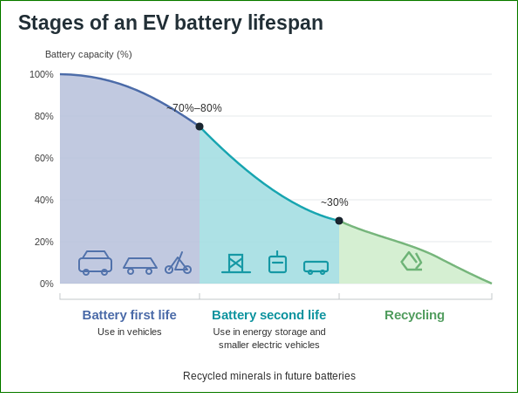
For fuel retailers entering the EV charging business, Smith noted an onsite storage battery built from former EV batteries could be an opportunity. Kothari confirmed that school districts are already trying that approach by using the excess capacity of electrified school buses. Tom Healey, VP of facilities at Nouria Energy Corporation, brought the convenience store perspective into the conversation. Nouria has 41 DC fast chargers at 22 retail locations and took an early interest in battery storage to alleviate demand charges that challenged their profitability, though equipment reliability has been an issue. Utilities that waived demand charges for the first two years are now reinstating them, which he warned could make DC fast chargers even less economical. Before deploying used batteries, he would need a firm to design the system and have it permitted, along with the proper certification or a warranty. Kothari noted that many repurposing companies have begun to offer warranties.
Safety is another other hurdle as Strasburger raised the risk of fire. Kothari explained that most repurposers offer warranties and that UL (Underwriters Laboratories) certifies the repurposing process, but no certification yet exists for the final product.
Policy and Strategic Stakes at Home and Abroad
Turning to policies pushing standardization, Strasburger asked which states are leading the charge. Kothari pointed to New Jersey and Colorado, whose EPR (Extended Producer Responsibility) laws require producers to report how many batteries they place in the state and how many they collect. California, Washington, Illinois, Hawaii, and Massachusetts are also actively discussing end-of-life battery policy. When Smith asked whether producers must recover a set percentage of batteries sold in the state, Kothari clarified that the tally is for reporting only. Both states also ban landfilling, and Colorado has set recycled content targets.
Abroad, the EU will require a digital battery passport beginning in 2027, and China has begun standardizing battery health measurement. Regulation is a balancing act, Smith cautioned, because rules that encourage reuse could also suppress EV growth. The stakes are also geopolitical. Citing Chinese restrictions on rare earth and lithium exports, Strasburger suggested a national strategic battery reserve like the one for petroleum. Torre-Bueno agreed that batteries are strategic at every scale, from the grid to drones, and said U.S. neglect of the industry “is a colossal strategic mistake.” Used batteries are also full of valuable materials, he added, and regulation will be needed to keep batteries with responsible parties rather than discarding them in junkyards where they can corrode, leak, and catch fire.
Grid Stability, Data Centers, and Community Pushback
Batteries are already proving their value on the grid. According to Torre-Bueno, batteries for grid stabilization have grown 20,000% in roughly five years and this is why California has avoided the heat wave brownouts of past years. That prompted Myra Kressner, CEO of Kressner Strategy Group and co-founder of Vision Group Network, to ask whether batteries could also ease public concerns about data centers. Kothari believes they can, noting that batteries help address the noise and air pollution that often concern nearby community members. He also shared an idea for data centers to become community battery farms, which would serve as backup power for the centers while strengthening electricity grid resilience for surrounding neighborhoods.
Even so, public acceptance has not caught up with the benefits. Healey described a nearby community fighting a storage project over groundwater and fire hazard concerns, even as Strasburger pointed to a Texas state hearing that credited added battery capacity with stabilizing the grid during the last two summers’ heat waves. As Smith observed, battery storage solves multiple problems, even if some oppose it.
What It Means for Fuel Retailers
For convenience and fuel retailers, the stakes are practical. Healey said Nouria needs a clear view of EV adoption to plan charging at existing sites and design it into new ones. As more drivers charge at home, stores will see fewer visits, but convenience operators will evolve with customer demand. Strasburger suggested retailers could buy excess electricity from EV owners to resell or to run their stations at a lower electricity cost. Kothari agreed that markets will focus on what is most financially rewarding, and electrification is increasingly that option. Healey’s takeaway was that a broader battery storage buildout will help retailers install more EV chargers and address demand charges.
 “I look at the market now and you’re talking about the initial eight- to fifteen-year period of primary use in EVs. I think that we’re getting to a point where demand for that type of service of recycling or repurposing batteries must be skyrocketing now and into the years ahead. It’s very interesting to think about all this and where we go from here.”
Final Reflection
An EV battery’s first life is no longer the whole story. As a wave of retired batteries approaches the next decade, the industry’s challenge is less about technology than about trust, built through standardized battery health data, certification, and policy that steers each battery to its highest-value use. Fleets, retailers, and policymakers who treat batteries as long-lived energy assets today will be best positioned to capture the value that remains after the vehicle is done with them.
Video Presentation
Presentation (PDF)

KEY TAKEAWAYS
- EV battery deployment grew significantly in the last seven years and lithium-ion battery prices have fallen nearly one hundred percent since 1991 making EVs more affordable. Competition, especially from Chinese manufacturers, is squeezing producer margins.
- There will be no single winning chemistry. LFP, NMC, and sodium-ion batteries will each be optimized for different uses.
- A battery is a data system and standardized health data could turn an opaque used battery into a financeable asset.
- The missing infrastructure layer is trust. Battery passports, standards, warranties, and insurance are needed to establish residual value and unlock financing for secondary use batteries.
- Repurposing and recycling are not competitors. Each battery should go to its highest value next-use before returning to the materials system.
- Battery health is not standardized today, as OEMs, charging companies, second-life firms, and recyclers each judge it differently.
- Fleets, not passenger cars, will drive second-life supply since passenger car batteries are expected to outlast the vehicles.
- Second-life storage could help fuel retailers manage demand charges, but operators want certification or warranties first.
- Used EV batteries could potentially power data centers, addressing noise and air pollution concerns, as well as producing power for nearby communities in emergencies.
Contact info@vgnsharing.com if you’d like the meeting transcript.
Notable and Quotable
“The thing about car batteries is that you’ve paid for the battery already and it’s actually quite large compared to a battery you might buy for a house. So, if you can use it, it’s an otherwise free resource.”
“Somebody at the CEC said, oh my gosh, and that very interestingly is a piece of slang that has become a term of art.”
“I’ll mention the term ‘rare Earth’ is a misnomer. They’re not rare, they’re just difficult to refine. The U.S. chose to allow the refining industry to move to China. If we chose to, we could make it locally.”
“We’re in the convenience business, so we’re just going to evolve with what the demand is out there from our customers.”
“What we said when we started the EV Vision Group was that it would address either misinformation or disinformation or lack of information.”
evVG Members

Srijata Chattopadhyay, VP: Americas EV Charging
Shell Recharge
Srijata Chattopadhyay is a leader in the clean energy space. Currently, she serves as the general manager of the EV charging business at Shell, which owns and operates over 4,000 chargers in North America. She and her team are accountable for the charging P&L, driver experience, digital product, and marketing. In the clean energy space, Srijata has been a member of the executive team at Volta Charging, worked in Google's energy services and renewables division, and at Tesla. In her decade in the industry, she has served in a wide range of functions - global strategy, capital markets, head of technology and head of deployment. Srijata holds a BA in Economics from Barnard College and an MBA from Wharton. She lives in San Francisco with her husband and two sons (4 and 1).

Garrett Fitzgerald, Sr. Director, Transportation Electrification
Smart Electric Power Alliance
Garrett Fitzgerald is a seasoned expert in transportation and building electrification, bringing over a decade of experience in advancing clean energy solutions. Since joining SEPA in 2021, Garrett has led efforts to drive beneficial electrification of transportation and buildings, working with utilities and stakeholders to enable a smooth transition to a highly electrified, low-carbon future. Now serving as Senior Director of Transportation, he oversees strategy execution, industry engagement, and the development of research and content to accelerate electrification.
Prior to SEPA, Garrett spent eight years at Rocky Mountain Institute, where he built and led the electricity program in India, accelerating electric vehicle adoption and clean energy integration. He managed RMI's Fleet Electrification program, co-led the EV-Grid initiative, and contributed to key projects on energy storage, distributed solar, and load flexibility. His expertise spans EV charging infrastructure, EV-specific tariff design, energy storage, and demand-side flexibility.
Garrett holds a BS in Mechanical Engineering from Santa Clara University and both an MS and a Ph.D. in Earth and Environmental Engineering from Columbia University, reflecting his deep commitment to advancing sustainable energy systems.

Tom Healey, VP Facilities
Nouria Energy Corporation
Tom is an accomplished retail development executive with focus on site evaluation, design, permitting and construction. A leader by example who manages a team of technical staff in all aspects of facility development, maintenance, and environmental compliance.
Tom's strong business and technical knowledge enable him to understand, communicate and achieve the objectives of the various project stakeholders.
Tom has been involved with all aspects of Nouria's EV charging strategy and implementation. Nouria has installed has installed DCFC charging stations at eight of its convenience stores and has 25+ more installations planned or in progress.
Tom is a licensed Professional Engineer and Construction Supervisor and is involved in several industry associations.
Gabe Klein, Former Executive Director
U.S. Joint Office of Energy & Transportation
Gabe Klein is a government official, urban planner, entrepreneur, and an investor specializing in sustainability and transportation.
Klein currently serves in the Biden Administration as the head of the Joint Office of Energy and Transportation. In this role, he has worked to enable the roll-out of a national electric vehicle charging network and electric school and transit busses in the U.S. Klein–who supports a $19 billion budget in this position–is the first-ever Executive Director of the Joint Office, also the first office in the federal government to span multiple agencies.
Previously, Klein co-founded Cityfi, a consultancy that works with local governments, foundations, and venture-backed startups. He was also the Commissioner of the Chicago Department of Transportation (CDOT), and the Director of the District of Columbia Department of Transportation (DDOT). Before those roles, Klein was an Executive with Boston-based Zipcar. He authored the book Start-Up City: Inspiring Private and Public Entrepreneurship, Getting Projects Done, and Having Fun.

John H. Kwon, General Counsel
CATL
As General Counsel of Global Legal & Strategy, Representative Director and Board Chairman of the largest manufacturer of EV and ESS batteries in the world, I am committed to implementing supply chain solutions to the manufacture and deployment of lithium Iron Phosphate (LFP) and MNC cells for world markets. Previously, I oversaw global investments and acquisitions for the biggest logistics player in Asia, which culminated in the USD 2.3 Billion acquisition of Kerry Logistics in 2022 and its IPO on the HKSE in 2023. Qualified to practice law in four jurisdictions, I started my career at a magic circle firm and progressed to the position of General Counsel at a Forbes 50 MNC, where we project managed the building of many iconic buildings across the globe. My legal journey has also afforded me to assume cross-functional and P&L positions having served as CEO & Board member to NYSE & ASX listed MNCs.
Chris Normandeau, Director
FirstService Energy
Chris Normandeau is director of FirstService Energy in the East region. Normandeau collaborates with community associations managed by FirstService Residential to reduce energy and water use and costs by serving as a trusted advisor to boards. Normandeau helps clients make informed decisions—saving them money, minimizing their carbon footprint, and improving their quality of life.
Prior to joining FirstService Energy, Normandeau was co-founder of Core, a New York City-based sustainable project management firm which focused on maximizing client savings while minimizing environmental impact. He also served as a Project Manager for construction firm OmniBuild, where he was involved in all aspects of design, construction and budgeting, including overseeing energy efficiency projects across New York State. Normandeau, who earned a B.S. in Mechanical Engineering from Rensselaer Polytechnic Institute, is a Certified Energy Manager (C.E.M.), is Lighting Certified (LC), and is a LEED AP BD+C®. He has saved his clients more than 100 million dollars by putting his considerable energy knowledge and expertise to work for them. Normandeau believes in the value of providing his clients with the tools and knowledge needed to continue reducing their carbon footprint, long after his energy savings initiatives have been put in place.

Kimberly Okafor, General Manager of Zero Emission Solutions
Trillium - A Love's Company
Kim Okafor is the General Manager of Zero Emission Solutions for the Love’s Family of Companies which includes Trillium Energy. Kim leads the strategy, development, and management of the EV charging, hydrogen fueling, and energy strategy businesses for the organization. Kim also leads the acquisition of grant funds for the organization. Under Kim’s leadership, Trillium and Love’s have increased its hydrogen portfolio to 5 fueling stations, it’s EV charging portfolio to over 230 ports, and acquired over $40M in grants funds.
Kim also actively serves on the Board of Directors for the California Hydrogen Business Council and has an Electrical Engineering degree from the University of Houston. Kim’s goal as the General Manager of Zero Emission Solutions is to develop economically sustainable business opportunities for our customers.

Darren Palmer, Global VP Electric Vehicle Programs
Ford Motor Company
Darren Palmer is the Global Vice President for Electric Vehicle Programs at Ford. He is responsible for all global programs current and future models.
Palmer led the inception and development of all of Ford’s current electric vehicles – the best-selling F-150 Lighting, Mustang Mach-, E-Transit, Electriic Explorer, Puma and the industry first, all-road sport SUV, the Mach-E Rally.
Palmer's key focus is developing products and experiences that resonate with consumers. He inspires large & diverse teams across multiple continents to deliver these products to global markets. His portfolio includes multiple award-winning vehicles, that are leaders in their field.
With extensive experience in global product development, Palmer has held positions in product development, product planning, manufacturing, and quality in the United Kingdom, Germany, and the United States. His work has also involved regular travel to South America, China, India, and Australia.
Recognized as a Motor Trend "Software Defined Vehicle" industry leader and part of the Automotive News Rising Star alumni, Palmer has cultivated a global network of industry colleagues.
He holds an MBA from Henley Management College, England, an electrical, electronics, and technology degree from Birmingham University, England, and is a member of the Institute of Engineering Technology (IET).

Deb Peck Kelleher, Deputy Director
Alliance for Clean Energy NY
Deb Peck Kelleher is excited to be working on clean energy policy after over 20 years with the New York State Legislature, with 10 of those years as the Committee Director for the Senate Environmental Conservation Committee, and the Senate Investigation and Government Operations Committee. She has worked on the net- metering law, the electric vehicles tax credit, and the reorganization of the Long Island Power Authority. She has extensive experience in New York State environmental policy and worked closely on expanding the Environmental Protection Fund, the drafting and passage of the State’s Brownfield Program, the Community Preservation Act, the Invasive Species Council, the phase out of MTBE from gasoline, and the protection of Long Island’s sole source aquifer. She was also the Director of the Senate Education Committee, Alcoholism and Addiction Committee, and the Infrastructure Committee.
She leads ACE NYs energy efficiency, transportation electrification work. Deb holds a Master's Degree in Environmental Policy from the University of Wisconsin - Green Bay with a focus on environmental economics and a B.A. in economics from LeMoyne College.
Francisco Pineda, COO and EVP for Business and Operations
The New School
Francisco X. Pineda is a faculty member at Columbia University and Executive Vice President (Deputy Commissioner) at the New York City Economic Development Corporation where he oversees NYC's largest real estate (60 million square feet) and waterfront ports portfolio as well as the largest urban de-carbonization program in the USA. He is also a Fellow of the Royal Institution of Chartered Surveyors (UK) and his research and professional interests lie in organizational intelligence, critical capabilities, and the structuring and management of complex project-based teams and enterprises.
In his twenty-year career, he has worked on all aspects of the development cycle—investment, development, and construction. He has led and turned around property development companies and construction projects, as well as businesses in hospitality, building materials, energy and more recently in climate-tech focused on waste valorization in Mexico.
His early career included corporate strategy roles at Hess as well as investment banking and private equity at Merrill Lynch. He was also engaged to lead one of the Middle East’s largest corporate recovery initiatives working alongside Shearman & Sterling and Moelis & Co. on restructuring a $1.6 billion real estate portfolio.
He holds an MBA in Finance from Columbia Business School, an MPA in Applied Economics from Columbia University’s School of International and Public Affairs and a BA in History. He is currently pursuing his PhD in Urban Systems at NYU’s Tandon School of Engineering advancing his research on Sustainable Regional Systems and the intersection of finance, technology, and governance and has completed advanced courses at the US Naval War College in Newport, RI.
In 2018, he was selected as a Presidential Leadership Scholar by the Clinton‐GW Bush‐HW Bush‐LBJ Foundations and continues to serve as a US Navy (Reserves) supply and logistics officer attached to US Forces Korea in support of Joint Logistics and the UN and with previous operational tours to Africa in support of Global War on Terror Operations and Asia in support of large-scale war game exercises in the Pacific.
He has served on several boards, industry committees, and as a senior advisor:
- NYC Mayor Task Force, Assessment and Recommendations of NYC Contracting and Procurement Reform
- MTA, Member of the Major Construction Review Unit
- Biden Infrastructure Policy Committee 2020
- World Economic Forum, Infrastructure 4.0
- Urban Land Institute’s (ULI-NY) Program Steering Committee
- Cities4All Global Leaders Council (Ford Foundation, UN-United Cities & Local Government)
Selected Projects & Deal Experience
- New York MTA (Metropolitan Transportation Authority) +$11 billion East Side Access Ops Readiness Review: Member of the MTA’s Major Construction Review Unit (MCRU)
- New York MTA (Metropolitan Transportation Authority) ~$2 billion Penn Station Access Project: Appointed member of the MTA’s Major Construction Review Unit (MCRU)
- $4 billion Delta/La Guardia Airport Reconfiguration Plan (NYC) Advisor to General Superintendent on Field Training and Development
- $7 billion Columbia University Manhattanville Development (NYC) Advisor on Sub-contractor Diversity Procurement and Development, MWBE
- $1.6 billion Restructuring of Sovereign Wealth Fund Real Estate and Construction Portfolio SVP Investment and Development and Executive Restructuring Committee (Infra, Hospitality, F&B, and Luxury Resi Assets)

Laura Renger, Executive Director
CalETC
Laura Renger is the Executive Director of the California Electric Transportation Coalition (CalETC). In this role, Laura leads the dedicated team of CalETC professionals responsible for all aspects of the organization’s legislative and regulatory advocacy. Together with the CalETC board and members, CalETC supports and advocates for the transition to a zero-emission transportation future to spur economic growth, fuel diversity and energy independence, contribute to clean air, and combat climate change. CalETC is a non-profit association committed to the successful introduction and large-scale deployment of all forms of electric transportation. The CalETC Board of Directors includes representatives from: Los Angeles Department of Water and Power, Pacific Gas and Electric, Sacramento Municipal Utility District, San Diego Gas and Electric, Southern California Edison, Southern California Public Power Authority, and the Northern California Power Agency. In addition to electric utilities, the CalETC membership includes major automakers, manufacturers of zero-emission trucks and buses, electric vehicle charging providers, autonomous electric vehicle fleet operators, and other industry leaders supporting transportation electrification.
Prior to CalETC, Laura developed extensive knowledge of transportation electrification and state energy policy during her 15-year career at Southern California Edison, where she most recently served as the Director of Electrification and Customer Services Policy. In this role, Laura provided the strategic leadership necessary to advance efficient electrification while maintaining affordability and providing beneficial energy programs to customers. Laura previously served as the Director of the Edison International President and CEO’s Office, supporting matters coming before the Edison International Managing Committee as well as activities at Edison International and its subsidiaries, SCE and Edison Energy Group.
Before her position with Edison International, Laura led the Air & Climate Policy team at SCE, where she was responsible for the utility’s regulatory and legislative policy concerning air quality, climate change, and transportation electrification. During this time Laura also served as the Vice Chair of CALSTART and CalETC board member.
Laura is a current board member of the Coalition for Clean Air and also serves as the Secretary of the Los Alamitos High School Football Booster Club.

Janine Robar, Associate Dir. Mobility Innovation
State of Michigan
As the State of Michigan’s Office of Future Mobility and Electrification’s (OFME) mobility innovation associate director, Janine is focused on growing Michigan’s mobility and electrification ecosystem and creating safer, more equitable and environmentally conscious transportation solutions for Michigan residents. Janine leads innovation growth initiatives at OFME including signature grant programs under the Michigan Mobility Funding Platform (MMFP) and state-wide testing assets. In addition to managing MMFP, she facilitates industry collaboration through various working groups convening subject matter experts to identify challenges in the state and develop solutions.
Prior to joining OFME, Janine was an associate director leading the mobility practice at Antenna Group, a leading cleantech communications agency. In this role, Janine focused on strategy development, media relations, and project management across account teams. Janine’s client experience spans product launches, company rebrands, high-profile public and private partnerships, market entries and crisis management. Her areas of expertise include advanced transportation infrastructure, autonomous vehicles, battery technology and growth-focused programs including incubators and accelerators.
Additionally, Janine previously led the overall b2b and b2c marketing communications strategy for Shift Transit, a mobility operations startup focusing on first/last-mile micromobiltiy solutions. Janine has also held multiple positions at leading automotive b2b publication, Automotive News including integrated marketing manager and conference specialist. While at Automotive News Janine planned and executed large-scale conferences and events for industry executives as well as integrated marketing campaigns and custom content for industry partners. In 2019, Janine was honored with the Automotive News Tony Merpi Award for Leadership & Innovation for her efforts in streamlining cross-functional processes.
A longtime cycling enthusiast and advocate, she is passionate about helping organizations develop accessible and equitable mobility solutions. Janine holds a Bachelor of Science in Communication and Marketing from Eastern Michigan University and lives on the eastside of Detroit.

Jay Smith, Executive Director
Charge Ahead Partnership
Jay has spent more than two decades working in coalition development and association management. Throughout his career he has done extensive work in both the transportation and energy sectors. He was instrumental in the creation of Charge Ahead Partnership and has served as the Executive Director since the coalition’s inception in 2021. Under his leadership Charge Ahead has grown from a small collection of stakeholders into a national coalition with more than 400 member companies, associations, and individuals committed to seeing the expansion of the EV charging network driven by private investment and competition.

Jessica Stoll Lowery, Project Manager
Climate Mayors
Jessica Stoll Lowery is the Project Manager for Climate Mayors, where she supports organizational initiatives, fosters collaboration among member cities, and oversees project implementation. With a background in local-level climate action, she is dedicated to supporting municipalities as they work to achieve their climate goals.
Before joining Climate Mayors, Jessica served as a Program Manager at the Electrification Coalition, where she managed technical assistance programs focused on transportation electrification. She also served as an AmeriCorps VISTA with the City of Indianapolis, contributing to climate and resiliency initiatives. Jessica holds a Bachelor’s degree from Xavier University and a Master’s degree from Marquette University.


Jose Torre-Bueno, Executive Director
Center for Community Energy
Green technology scientist and campaigner with 14 years of experience creating better solutions for green energy cost-saving measures and lobbying with communities to pursue more sustainable energy programs. As a subject matter expertise level, have in-depth knowledge of battery technology, programming battery control systems to photovoltaic systems, analyzing utility rates, and modeling future energy demand.
Highly active in the community to support green measures and CCAs (Community Choice Aggregations) and connected to community leaders and influencers.

Bonnie Trowbridge, Executive Director
Drive Clean Colorado
Bonnie serves as the Executive Director of Drive Clean Colorado, spearheading initiatives to ensure clean air for all by promoting clean transportation and equitable mobility. With extensive knowledge of the market, from consumer EVs and alternative fuels to heavy-duty manufacturers and fleets, Bonnie has a thorough grasp of vehicle incentives across the U.S. She co-chairs the Women of EVs Front Range chapter and is a Board member of the Colorado Department of Transportation’s Transit Enterprise Board. Her background includes nonprofit development and fundraising, grant writing and management, and event management. Bonnie spent 11 years in public relations and marketing at Lightning eMotors, which manufactures electric powertrains for medium- and heavy-duty buses and trucks. She also managed programs at CALSTART, a nonprofit dedicated to advancing clean and efficient transportation, leading events like a California policy summit, industry leader workshops, and utility engagement programs. Additionally, Bonnie has worked as a development director for nonprofits in Denver and Washington, D.C.
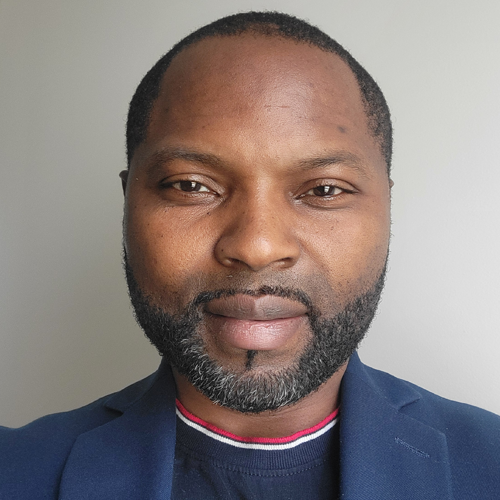
Fred Yonghabi, Sr. Specialist
Con Edison
Fred is dedicated sustainability and environmental professional with more than 10 years of experience in conservation and environmental sustainability.
Fred is passionate about energy efficiency, environmental and corporate sustainability, and this passion has contributed to his continuous interests and wish to become an actor of change to help organizations with their sustainability, ESG, and climate transition.
evVG Facilitator


Nathan Niese, Managing Dir & Partner
Boston Consulting Group
Based in Chicago, Nathan currently serves as BCG's global leader for the Electric Vehicle and Energy Storage topics. He works with OEMs, suppliers, service providers, and ecosystem partners on strategies related to the energy transition.
Become an Ally Member
Ally Members develop and nurture long term relationships with Vision Group members, playing an integral part in the discussion topics and member recruitment.
VGN Ally Members voices are heard in Vision Reports and websites, podcasts, social media, and industry media and events.
Be part of the conversation. Share Today to Shape Tomorrow. Become an Ally Member today!