GCVG ALLY SUPPORTERS


A Roadmap for the Future of Mobility Retail
Wells Burke, co-founder & CEO of CodeVine, and Jeffrey Campbell, director of data science at Blend 360, opened their presentation, “Data Makes What is Impossible Today, Possible Tomorrow,” by framing the c-store data challenge around two persistent problems: data that exists but that operators cannot freely explore, and signals hiding in plain sight that have not yet been activated as usable data. Burke issued a direct challenge to conventional IT thinking, noting that data access has historically been filtered through custom reports and IT gatekeepers. He believes the new standard must be unrestricted access to any data an authorized user is permitted to see. “It’s time to let anyone run any query they want, whenever they want, on any data they are authorized to see,” Burke said. “Whoever, whatever, whenever. That’s the new goalpost.”
“As the industry talks more about operational intelligence, customer engagement, retail media, and AI, the reality is that none of those things work particularly well without disciplined approaches to data management, integration, organizational alignment, and contextual understanding of the information.”
“In these days, we think that the people and the real connection make the difference and will make the difference also in the future.”

 “At some point, you have to start with new technology because you will never know unless you try.”
Claudio Reboredo, partner and owner of FGC Fuels Marketing, asked how frequently customers actually use self-checkout compared with traditional cashier transactions. Schütte said self-checkout currently represents only about 1% to 2% of total transactions, but usage can rise dramatically when employees actively demonstrate the system. On some days, a terminal may process only a handful of purchases, while active encouragement can increase that figure to around 50. The experience has shown Westfalen that customer adoption is partly behavioral. Shoppers entering a familiar forecourt often head automatically toward the cashier unless something interrupts that routine and directs them toward another option.
Noting hydrogen’s prominence in Westfalen’s broader energy business, Roy Strasburger, CEO of StrasGlobal, president of Compliance Safe, and Vision Group Network co-founder, asked how important it remains within the mobility network. Schütte explained that Westfalen’s expectations have changed substantially. Five years ago, the company viewed hydrogen as a likely solution for heavy-duty transport, but advances in charging technology have shifted its outlook. Westfalen now expects ultra-fast charging to play the larger long-term role in heavy-duty mobility, while hydrogen is more likely to support industrial decarbonization.
A follow-up question from Mert Dünder, head of operational technology, Petrol Ofisi Group, focused on the economics of heavy-duty EV charging and Westfalen’s recently opened truck-charging site. Schütte said the company plans to pilot four locations to gain operational experience, but current utilization does not yet support a scalable business case. For now, the sites are investments in learning and future readiness rather than near-term profit generators. Westfalen believes the market will develop over time, and its ownership is willing to invest early to better understand what the future model could require.
Joe Boyle, CEO of FreshStop, closed with questions about the Alvore coffee offer. Schütte explained that most of the network uses fully automatic whole-bean machines with fresh milk rather than staffed barista service. Only one of Westfalen’s largest sites, in Cologne, currently operates a dedicated barista machine and more extensive coffee area. The exchange reinforced the broader theme of the presentation, which is that Westfalen is building a consistent brand and customer proposition, while allowing the physical format, service level, and technology mix to vary according to the needs and economics of each site.
Rethinking Retail Differentiations
In his presentation, Markus Schröder, CEO and owner of MS Retail, challenged convenience and fuel retailers to think beyond private label as a standalone merchandising tactic and instead view it as one piece of a broader retail proposition. Against a backdrop of changing shopper missions, EV adoption, and growing foodservice demand, he argued that retailers need a clearer understanding of why customers visit their sites and for what they want the business to be known. That foundation should drive category roles, assortment decisions, pricing, and ultimately, where private label can create meaningful differentiation.
Examples from Aldi, Lidl, and smaller European retailers illustrated that scale alone does not determine success. A relatively small Swiss bakery chain can compete effectively on fresh food by offering a tightly curated assortment, strong quality, and reasonable value. At the same time, large discounters do not automatically win every occasion. Ready-to-eat food can still fall short of QSR and bakery quality, creating an opportunity for convenience retailers willing to invest in freshness and product quality rather than simply chasing the lowest cost. As Schröder put it, “low cost is not enough.”

“Private label then is the secret sauce. It helps you to differentiate, it helps you to make your business better, it helps you to have a clear statement when it comes to your shopper, but it also helps you, in many cases, to drive margin.”
Private Label: Scale, Economics, and Category Choice
The broader discussion shifted from the principles of private label to the practical trade-offs of making it work in convenience. Jesper Østergaard, CEO of Reitan Convenience Denmark, noted that while private label is deeply established in the company’s discount supermarket business, the convenience side has faced more limitations, particularly in beverages, where volumes can be too low to support the economics. He also pointed to another consideration: replacing branded products with private label can mean giving up supplier marketing support, making the decision a balance between differentiation, margin, and commercial support.
That led to a wider discussion about where private label can add the most value. Rather than treating it as a default replacement for branded products, the focus was on identifying categories where brand leadership is less entrenched and where an owned proposition can strengthen the assortment. The group also challenged the assumption that private label belongs only at the entry-price level. Depending on the category strategy and shopper proposition, it can sit in mid-price, premium, or category-specific tiers. The broader takeaway was that private label should be used selectively, with a clear role in the category and a commercial case that supports it.
“[Our] balance [is] that if we introduce a lot of private label products, we don’t really get marketing support from the supplier as we do from the branded products, so it’s sort of a fine balance.”
Global Shopper Needs, Local Execution
The group also explored how retailers can create efficient strategies across markets without ignoring local preferences. The discussion reinforced that broad shopper motivations may be shared across countries, but the way retailers respond to those needs should reflect local behaviors, market conditions, and customer expectations.
Rather than assuming identical offers everywhere, the emphasis was on using shopper insight to shape the proposition at the market and site level. Boyle echoed that principle from South Africa, arguing that operators must consider their country, micro-market, and existing brand architecture when deciding whether to develop a house brand or partner with an established name. His experience underscored the importance of adapting broader retail principles to the realities of each market rather than forcing a uniform solution across an entire network.
Schütte added a different marketing perspective for a smaller German network. Rather than compete through national media spending, her company concentrates on local promotion, social media, targeted digital activity, and selected influencers. She explained that the business generally prefers to “better invest into the products and the experience on site and not in marketing spends.”
“What the consumer demands is quality, quality, quality, and they want that right across each of your locations”
Foodservice, Coffee, and the Site-Level Proposition
Foodservice and coffee repeatedly surfaced as categories where retailers can create a compelling reason to visit. Donaldson emphasized quality, consistency, innovation, and loyalty, noting that his network now sells more than five million cups of coffee annually across roughly 90 locations. Boyle’s examples showed that the correct coffee proposition can vary by store, with premium external brands making sense only when volumes support the relationship.
“The consumer has already a perception of what you’re going to offer just when you just go across the forecourt.”

Reboredo offered a Latin American perspective, explaining that a fuel company’s heritage can actually weaken its credibility as a food provider. His business responded by creating the Lion Place umbrella and partnering with recognized foodservice brands rather than relying on the forecourt brand alone. In his example, the premium coffee proposition sold roughly four times more coffee than the conventional fuel-led format, while a recognized sandwich brand generated about twice the sandwich sales. The result was materially stronger coffee and sandwich sales. “The reputation for the fuels company as a food provider was always questionable,” he observed, reinforcing the need to separate food credentials from fuel when shoppers do not naturally connect the two.
The Future: Speed, Non-Fuel, Self-Service, Talent, and Data
Looking ahead, the group focused on what convenience can credibly own if price leadership is unrealistic. Schröder’s answer was straightforward: “I think it’s speed.” Chilled beverages, quality coffee, fresh products, and fast service can provide differentiation, while price should remain reasonable without becoming the central proposition. He also urged retailers to invest in talent from outside traditional fuel organizations and to make better use of existing data, not simply collecting it, but segmenting it by mission and turning it into actionable insight.
That future orientation was reinforced at the close of the discussion when Agnieszka Bobrukiewicz, board member of Orlen Unipetrol and director of non-fuel segment for ORLEN, shared observations from a seven-country network, bringing the conversation toward self-service and non-fuel growth. Bobrukiewicz reported that non-fuel margin is already surpassing fuel margin in the Czech Republic and described investment in self-service stores, vending, expanded coffee offers, and other services designed around time savings. Bobrukiewicz noted that what once seemed like an ambitious 30% non-fuel contribution has now climbed to nearly 55% in the Czech Republic. Regulatory differences still require country-specific solutions, but the broader direction is clear that growth will increasingly depend on convenience retailers using their space, formats, technology, and customer proposition more creatively as the traditional fuel model evolves. “The modern convenience is all about the time saving,” she said.
Final Reflection
Convenience retail is increasingly defined by what happens beyond the pump. Foodservice, coffee, private label, self-service, EV charging, and data all present growth opportunities, but their value depends on disciplined execution and a clear retail identity. The strongest strategies are not one-size-fits-all; they reflect local shopper needs, site economics, brand credibility, and the role each category plays in the broader proposition. As fuel becomes less central, retailers will need to differentiate through quality, speed, convenience, and experience while making smarter use of technology, talent, and insight to grow non-fuel margins and build long-term relevance.
Video Presentation
Presentations (PDF)


KEY TAKEAWAYS
- Convenience retail growth is increasingly tied to non-fuel categories, especially foodservice, coffee, self-service, and other services that strengthen the reason to visit beyond fueling.
- Private label works best when it is tied to a clear category strategy and retail identity rather than treated simply as a lower-price alternative to national brands.
- Scale matters differently by category, making fresh food and bakery easier private-label entry points than packaged beverages that require larger production runs.
- Strong convenience propositions are built around local shopper needs, site economics, and market realities rather than a one-size-fits-all format.
- Foodservice and coffee can become powerful destination categories when retailers invest in quality, consistency, branding, and customer experience.
- Retailers should evaluate brands and private-label products by the value they create across the entire site, including traffic, basket, loyalty, and fuel or charging activity.
- Speed, convenience, chilled beverages, fresh products, and quality coffee are more credible competitive advantages for convenience retailers than price leadership.
- Technology such as self-checkout, smart stores, EV charging, and AI-enabled tools are most effective when retailers test, refine, and actively support customer adoption.
- Data and outside talent can help lean retail teams make better category decisions, identify shopper missions, and spot growth opportunities more quickly.
- Long-term success will depend on combining strong execution, differentiated branding, local flexibility, and smart investment as the traditional fuel-led model continues to evolve.
Contact info@vgnsharing.com if you’d like the meeting transcript.
Notable and Quotable
“We are 100% family owned and the strategy of the family is really what they expect from us, also from the leaders and the board, that we think in generations and not in quarterly releases.”
“Aldi is quality obsessed. They’re quality driven. […] And yet, honestly, when it comes to ready-to-eat products, they are not matching the QSR and bakery quality, which is a huge opportunity for [convenience retailers] to differentiate and to spend a bit more on product quality and on freshness.”
“That’s where we started trying to create our strategy. I think the first thing I learned, don’t create your own private label for the sake of it. There has to be the commercial sense”
“The non-fuel market is growing like crazy. The Czech Republic, already since January, has generated more non-fuel margin than fuel, which is really quite a lot.”
“One thing that discounters do really well, it’s experimentation. It is really the small granular improvement, that testing of product, that I believe is a sign of a great retailer.”
“We challenged ourselves and not only created an umbrella called Lion Place as a food hall, but we also incorporated a premier, super well-recognized brand in the market for coffee and foodservice, and also we developed our own restaurant completely detach it from the field’s heritage, and the result was fantastic.”
GCVG Members


Agnieszka Bobrukiewicz, Board Member of Orlen Unipetrol, Dir. Non-fuel Segment for ORLEN S.A
ORLEN Unipetrol a.s.
AGNIESZKA BOBRUKIEWICZ is a member of the ORLEN Unipetrol Group’s Board of Directors, responsible for retail in the Czech Republic, Hungary, Slovakia and Austria, and serves as Executive Director for the ORLEN Group’s non-fuel segment.
She is a senior executive with 20+ years of international experience in fuel and convenience retail and FMCG across Central and Eastern Europe. In her current roles, she oversees P&L for ORLEN retail operations in the Czech Republic, Slovakia, Hungary and Austria and leads the non-fuel business across seven markets: Poland, the Czech Republic, Slovakia, Hungary, Austria, Germany and Lithuania, shaping the ORLEN Group’s non-fuel strategy.
Agnieszka has a proven track record in driving business transformation, strengthening retail brands and delivering growth across fuel and non-fuel segments, including convenience and food. She has extensive experience leading cross-border teams, launching new formats and executing commercial strategies in highly competitive markets.
She focuses on innovation, customer experience and building high-performing teams that deliver sustained business impact.
Alongside her executive responsibilities, she has for many years actively supported women in business through close collaboration with foundations and women’s professional organizations, advancing leadership development, inclusion and equal opportunities across markets.

Joe Boyle, Chief Executive Officer
FRESHSTOP
Joe Boyle is the Chief Executive Office of FreshStop, a leading forecourt convenience store in South Africa - part of the Foo Lover’s Market Group. Joe began his career in Ireland, where he trained as an Apprentice Baker before emigrating to South Africa in 1983, Married with two children he settled in Nelspruit near his in-laws, he found employment with a construction company, contributing to the Sappi paper mill expansion at Ngodwana for nearly four years. His children's need for better educational opportunities prompted a move to Randburg, where his 3 child was born.
Entering the retail sector as a Bakery Manager at Hyperama Sandton, Joe quickly ascended to Specialty Food Manager. His ambition led him to a management training program that included an intensive two-year course akin to a mini MBA, culminating in a thorough 14-week retail overview with 17 challenging exams. Excelling in his studies, Joe graduated top of his class of 32, leading to a Buyer position at Hyperama's Head Office. He impressively grew his purchasing portfolio there from R1.5 million to over R100 million per month over six years.
In 1994, the he was appointed as Operations Manager at King Pie, a modestly sized franchise with 16 stores. Within three years, Joe ascended to the role of Managing Director as the brand expanded its presence to nearly 300 stores within South Africa and ventured globally with openings in Australia, New Zealand, Poland, and England.
Following King Pie's acquisition by Rebhold, subsequently renamed Mvelaphanda, the franchise met its profit targets ahead of schedule under Joe’s leadership. Simultaneously, sluggish growth and profitability issues at Royal Foods Services, another Rebhold subsidiary in Durban's contract catering sector, prompted shareholders to assign him to groom a new Managing Director for King Pie and oversee profitability and growth improvements at Royal Foods Services. Key to success was advancing the company's BEE rating and merging it with Sechaba Afrika. Joe’s efforts were instrumental in increasing annual turnover from R130 million to nearly R500 million over five years and reaching satisfactory profit margins. Cyril Ramaphosa, now President of South Africa, collaborated on this project.
While serving Royal Foods Services, they pursued an MBA from Wits University over two years and passed all courses but had to forgo the final paper due to a career transition.
In December 2004, Butterfield Bakery enticed Joe with an Operational Director role that included equity participation. Despite initial financial losses and challenging circumstances, his leadership led to a company turnaround. The goal was set by the primary shareholder to sell the company within three years at a value correlating with three to four years of pre-tax profits. This objective was met when Butterfield Bakery sold for more than triple its PBT after three years. After taking a two-month hiatus, Joe resumed his career at Fruit & Veg City in March 2008, taking on the role of Director for the FreshStop Brand, which initially included 14 stores. Since then, the brand has expanded to 330 franchised stores. The key goal was to develop and scale a robust business model designed to grow within the range of 300 to 400 stores throughout Southern Africa.
During Joe’s tenure with organisations such as Hyperama, King Pie, Royal Foods Services, and Butterfield, they actively participated in numerous professional development programs covering Marketing, Advertising, Sales, Project Management, Leadership, Emotional Intelligence, and Financial Management.
Joe has cultivated considerable networking connections and gained deep insights into his field by serving in various capacities across industry forums. His roles have included Council Member of the Franchise Association of South Africa, Vice President of the National Association of Catering Executives, Board Member of the Chamber of Baking in South Africa, and Treasurer of the Craft Bakers Association of South Africa. Additionally, he was appointed as a Board Member on the NACS (National Association of Convenience Stores) International Board.
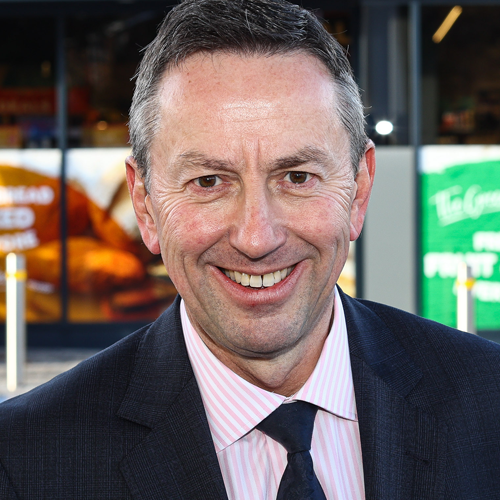
Brian Donaldson, Chief Executive Officer
The Maxol Group
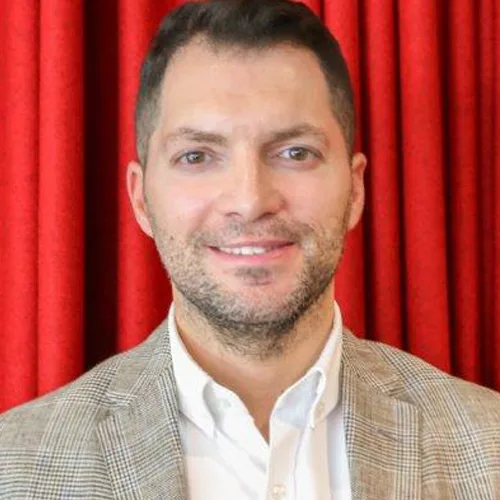
Mert Dunder, Head of Operational Technology
Petrol Ofisi Group
Results-driven manager with progressive experience gained in the competitive energy industry. Proven track record in several communication infrastructure, automation and operational technology activities, product development through project management, effective staff management. Expertise coupled with the development of strong customer and vendor relationships conductive to business growth. Demonstrates in-depth technical, analytical knowledge and strategic ability to facilitate operational and procedural planning – evaluating – assessing and managing the technology process.

Jorge Escuin-Rubio, Head of Strategy and Business Development – Mobility
REPSOL SA
With 30 years of experience in the energy sector, Jorge has spent almost his entire professional career in Repsol.
He began in 1994 in different sales and management positions in the Service Stations Business. He continued his professional growth by leading teams in Planning and Control Downstream Business, Regulatory Affairs, until he reached his current position as Director of Strategy and Business Development in the mobility area where, together with a great team, he works hard to provide customers with products and services wherever, whenever and however they need them.
An advocate of a fair energy transition, which ensures the promotion of efficient and sustainable mobility, from technological neutrality to excellence in customer experience, Jorge is leading the deployment of a new 100% renewable diesel at 1,500 sites in Spain and Portugal by the end of the year.
Over the last few years, he has also promoted the transformation of service stations in the Repsol group, with significant projects such as the creation of a new model of semi-proximity store, SuperCor Stop and Go, the set up the largest digital network of carwashes in Spain, Repsol Klin or several partnerships with leading brands such as El Corte Inglés, Amazon, Starbucks, Nespresso, Disney, …
He is also a member of the board of directors of Wible which is the car sharing company that Repsol has in Madrid, together with the Korean automaker KIA.
With a degree in Business Administration, he also holds an MBA from IESE business school.
Company description:
Repsol is a multi-energy company committed to a sustainable world with a forward-looking vision based on innovation and efficiency.
Repsol has a diverse team of more than 24,000 employees representing 79 nationalities who work across 29 countries.
They search for, produce, transform, and sell the oil and natural gas they obtain, in the knowledge that they need to meet both current and future energy needs.
Repsol is present throughout the entire energy value chain cycle, ranging from oil and gas exploration and production to low-carbon electricity generation and the production and marketing of energy solutions for the home, industry, and mobility.
It offers many solutions to meet society's essential needs, always guaranteeing the highest quality, safety, and efficiency of all its products and services, developed with the highest technological innovation. Repsol provides its customers with all the energy solutions they need for transportation, home, or business.
Repsol is Leading the energy transition with the aim of achieving the primary goal of becoming net zero by 2050. It relies on various lines of action in line with the targets set out in the Paris Agreement. To reach this goal, Repsol has set itself a demanding roadmap, including ambitious emissions reduction targets initially established in its 2021-2025 Strategic Plan and updated on Repsol ESG Day.
Digitization and technology are fundamental in meeting its goal of being a net-zero emissions company by 2050. It relies on digital technologies such as artificial intelligence, robotic process automation (RPA), cloud solutions, advanced data analytics, and more. In addition, Repsol boasts its research center, the Repsol Technology Lab, where more than 250 experts work on the development of new technological solutions for the energy industry's entire value chain.
Ambition, technology, and project execution enable Repsol to increase the speed at which they achieve this target.

Santiago Ferreccio, Head YPF FULL
YPF SA
Business Administrator with a Postgraduate degree in Business. Oriented to commercial management, operations, and new business development, with analytical thinking, negotiation, planning, and organization skills.
Vast experience with more than 20 years in Convenience Retailing, Sales, Marketing, and Operations, leading oil companies in the Argentine market. I emphasize my experience in the formation and management of heterogeneous client-oriented work teams, obtaining
results and providing advice. Member of the YPF Commercial School, training 1000+ employees.
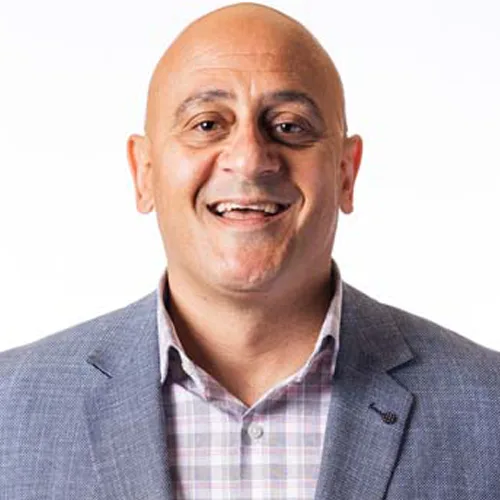
Theo Foukkare, Chief Executive Officer
Australian Association of Convenience Stores (AACS)
Theo Foukkare is the CEO of the Australian Association of Convenience Stores (AACS), bringing extensive leadership experience and strategic vision to the dynamic convenience retail industry.
Passionate about driving growth, innovation, and sustainability within the channel, Theo is a trusted voice for retailers, suppliers, government stakeholders & the media.
Theo’s collaborative approach ensures that AACS remains a leading advocate for the convenience channel, prioritizing both the success of legitimate businesses and the broader community’s needs. An experienced and strategic leader, Theo is committed to helping shape the future of Convenience in Australia through his advocacy, thought leadership, and focus on protecting the interests of the industry.
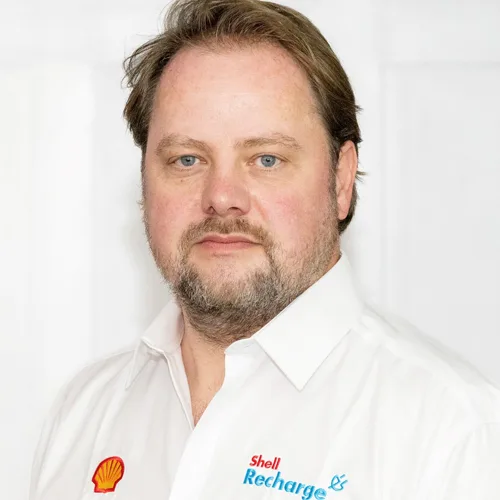
Edwin de Graaff, Global Head of Shop Format & Innovation at Shell Mobility & Convenience
Shell
Edwin is a seasoned executive with over 20 years of experience in Retail and Supply Chain Management. Currently, he serves as the Global Head of Shop Format & Innovation at Shell Mobility & Convenience, where he spearheads strategic initiatives for customer offerings, including the development of retail design of EV-Hub, Shell Café, modular store concepts, and many other projects. He also holds a position as the Director and Board Member of Shell TapUp B.V.
Throughout his career, Edwin has demonstrated exceptional leadership skills, leading teams of over 50 professionals and enhancing Shell's non-fuel retail capabilities. His leadership approach focuses on developing people, fostering a collaborative environment, and empowering his team to achieve their full potential. Edwin's strategic leadership in optimizing supply chain strategies has been instrumental in driving significant improvements and efficiencies.
Edwin's extensive retail expertise includes negotiating multi-billion-dollar deals and overseeing retail procurement globally for the retail supply chain. His leadership in contract negotiations and supplier relationship management has driven significant cost efficiencies and value creation.
Edwin holds executive education credentials from MIT, Wharton, and Kellogg, and has a background in Business Economics and Information Management. A persuasive communicator and thought leader, Edwin frequently represents Shell at industry events, sharing insights on convenience retail, innovation, future outlook, and business practices.
Outside of work, Edwin enjoys golf, hockey, cycling, and spending time with his wife and 3 children. He speaks 4 languages, Dutch, English, German and Spanish.

Frodi Hammer, VP & Founder of A2i Technology
A2i by OPIS, A Dow Jones Company
As the VP and Founder of A2i Technologies at A2i by OPIS, a Dow Jones company, Frodi Hammer is a pioneer in implementing artificial intelligence within the retail industry. He serves as the chief architect and driving force behind PriceCast, a revolutionary self-learning algorithm designed for fuel price optimization. A2i by OPIS is an advanced AI firm that specializes in customer-centric fuel pricing.
Earlier in his career, Frodi was a Ph.D. researcher in AI at the University of Southern Denmark. His academic research, which earned recognition at various international conferences, was foundational to creating PriceCast's unique, customer-focused algorithm. By merging sophisticated artificial intelligence with rigorous compliance standards, PriceCast empowers fuel retailers to navigate intricate markets with confidence. It replaces obsolete, rule-based mechanisms with predictive, customer-centric pricing models that enables fuel retailers to meet their strategic objectives ethically, transparently, and successfully.

Christopher Hartman, VP of Fuels, Advertising, and Development
Rutter's
Chris is currently the Vice President of Fuels, Advertising, and Development for Rutter’s convenience stores, in York, PA, as well as President of M&G Realty. He is the 11th generation to work in the family business, dating back to the founding of the Rutter’s farm in 1747.
Chris grew up working in his family’s stores, beginning at age 13, while also attending and participating in various convenience store industry events for over 20 years.
In 2016, Chris moved to Washington D.C. to attend George Washington University’s Global MBA program, receiving his master’s degree in 2018, with a concentration in Finance. In July of 2018, Chris returned to his roots, joining Rutter’s as Director of Fuels and Forecourt, later adding Advertising, Construction and Real Estate acquisition to his responsibilities with the company.
In his free time, Chris enjoys travelling and golfing. He currently lives in York with his wife, Hilarie.
Zsuzsa Hordai, Head of Strategic Projects
SPAR International
With over 10 years of experience in international market development, strategy, e-commerce and AI, I am currently leading international strategic projects across SPAR worldwide, a leading global food retail organization with over 13,500 stores in 48 countries. I also coordinate and manage our development plans in the GCC region. My mission is to drive growth and innovation through collaboration across SPAR's diverse and dynamic markets, leveraging data, AI-driven insights, best practices, and the power of our network.
As a former International Retail Development Manager at SPAR International, I successfully led the strategic business development and expansion in Europe and China, launching new markets, developing omni-channel capabilities, and leading the global e-commerce action group. My strong background in consumer goods, retail, data, and AI, combined with certifications in Lean Six Sigma, communication and finance, enables me to create value for customers, partners, and stakeholders through effective and engaging solutions.
In addition to my professional roles, I am passionate about mentoring and coaching emerging leaders within the industry. I have guided numerous professionals in their career development, helping them to achieve their goals and excel in their roles. I am particularly committed to female empowerment and leadership, actively supporting initiatives that promote gender equality and the advancement of women in business.
My commitment to leadership extends to my engagement with industry bodies such as NACS, CGF, and the AI Council, where we collaborate to drive key initiatives within the grocery retail industry for a more sustainable and technologically advanced future.

Daniel Kaddik, CEO
Bundesverband freier Tankstellen
Daniel Kaddik is Chief Executive Officer of bft – Bundesverband freier Tankstellen, the German Association of Independent Petrol Stations, which represents a network of 530 companies in the fuels sector. This segment of Germany’s Mittelstand comprises more than 2,800 petrol stations and over 27,000 jobs. In addition, he leads the eFuel Today project, which advocates for CO₂-neutral mobility. From 2023 to 2024, he also served as a member of the management board of MEW Mittelständische Energiewirtschaft Deutschland e.V., the German Association of Medium-Sized Energy Companies.
He is also a member of the Advisory Board of Automechanika, the world’s leading trade fair for the automotive aftermarket, and serves as a jury member for the “Petrol Station of the Year” award. In addition, he is a member of the Steering Committee of the Working Group on Monitoring Methodologies for CO₂-Neutral Fuels (WGMM), a cross-sector industry initiative that develops technical approaches for proving and monitoring the use of CO₂-neutral fuels in road transport.
Daniel Kaddik has 15 years of experience in politics, association work, think tanks and NGOs. During this time, he has worked with national and local governments, politicians and numerous NGOs in Germany, India, Russia, Central Asia, Southeastern Europe and at EU level. He is active as a political and strategic consultant for political parties, candidates and NGOs, and is co-founder and Managing Director of EZYcloud.org, a Salesforce implementation agency specializing in CRM solutions for NGOs.
From 2018 to 2022, Daniel Kaddik was Executive Director of the European Liberal Forum (ELF), the political foundation of the European Liberal Party, the ALDE Party. Together with its member organizations, ELF works across Europe to introduce new ideas into political debates, create platforms for discussion and encourage citizens to make their voices heard.
From 2012 to 2019, he headed the Southeastern Europe office of the Friedrich Naumann Foundation for Freedom, a non-profit organization that promotes liberal values, the rule of law and economic freedom. The foundation is active in more than 60 countries and provides political consulting and educational programs.
Prior to that, Daniel Kaddik worked for the foundation in Germany, India and Russia. He is actively committed to entrepreneurship as well as personal and political responsibility. His focus lies on liberal policy solutions, economics and the social sciences, as well as citizen participation in policymaking.
He holds degrees in Governmental Studies from the University of Erfurt, European Studies from the University of Hamburg and International Studies from the University of Birmingham.

Jesper Østergaard, CEO
Reitan Convenience Denmark A/S
7-ELEVEN DANMARK
- City stores, railway stores and gas stations (Uno-X)
- First 7-Eleven store in Denmark opened in 1993
- Market leader in the Danish convenience market
- High focus on food & beverages – including healthier choices
- "Convenience retailer of the year 2019”, NACS
- Won “the plant-based product prize 2021” for offering a large range of plant-based products nationwide
JESPER ØSTERGAARD
- CEO since 2006
- Value driven and very operational / customer centric
- Driven by achieving goals with the franchisees and the team


Nicolas Papadopoulos, Director New Markets
Verifone
Nicolas is Director of New Markets with extensive experience supporting petroleum retailers and convenience store operators across global markets. He specializes in driven growth through strategic partnerships, technology-enabled solutions and deep understanding of fuel, retail and payment ecosystems. Nicolas has served in various roles inside Verifone from product, sales and now responsible for growing Verifone's presence into new markets outside the US.

Daniel Quest, SVP Convenience
METRO AG
Daniel brings over 20 years of extensive experience in steering UK symbol groups, during which he has held a variety of leadership roles and has been responsible for overseeing the operations of two prominent UK brands, Budgens and Cost Cutters.
His professional journey has allowed him to develop a deep expertise in areas such as concept development, the establishment of robust franchise partnerships, and the execution of rapid growth programs. In addition to these strategic initiatives, he has also managed several critical business functions—including sales, property management, supply chain coordination, store development, and space planning—ensuring operational excellence across the board.
Currently, Daniel works as a key member of the executive team at Metro AG, a globally recognized wholesale food retailer. Metro AG is renowned for its significant market presence, with earnings exceeding €30 million and operations spanning more than 33 countries, supported by a workforce of over 85,000 employees.
In his role as Senior Vice President of the Convenience team, Daniel is charged with leading the development and implementation of innovative convenience franchise strategies across 9 countries. In this capacity, he effectively oversees a rapidly expanding network of over 7,000 stores, driving the company’s growth and ensuring that its franchise model remains competitive and well-positioned for future success.

Claudio Reboredo, Partner - Owner
FGC Fuels Marketing
Claudio Reboredo, a seasoned international executive and entrepreneur, straddles diverse worlds as a consultant, speaker, and key industry figure. Currently, he holds the pivotal role of Relationship Partner for LATAM at NACS (National Association of Convenience Stores, USA).
Claudio's international prowess is evident in his 30+ years of experience within a multinational corporation, spanning varied stints across the UK, Colombia, Mexico, and the US. His expertise lies in navigating diverse industries like retail, oil and gas, and technology, having held leadership positions in sales, marketing, and operations.
Beyond corporate walls, Claudio leverages his acumen to guide prominent companies in Latin America through his consulting firm Core Crowd (www.corecrowd.net).
He is also the co-founder of FGC Fuels Marketing (www.fgc.company), a fuel wholesale and retail powerhouse in Argentina. FGC was the first Latin American business to win the NACS Convenience Retailer of the Year Award in 2023. We have also been recognized as Argentina's best retailer by Shell International and ranked second globally in the "The Best Foodvenience Store in the World 2024" competition.
A sought-after speaker at industry events, Claudio imparts insights on strategy and leadership. Driven by an insatiable curiosity and a passion for continuous learning, his career began in executive education, where he created SIMx (corecrowd.net/simx), a "business war" simulation model for mastering the intricacies of retail.
Claudio's literary debut, "El cuento del Liderazgo”, delves into inspiring stories to unveil the essence of true leadership.
He further lends his expertise as an advisor to the NACS International Board of Directors and the NACS LATAM committee, having previously served on the Coca Cola Retailing Research Council for Latin America.
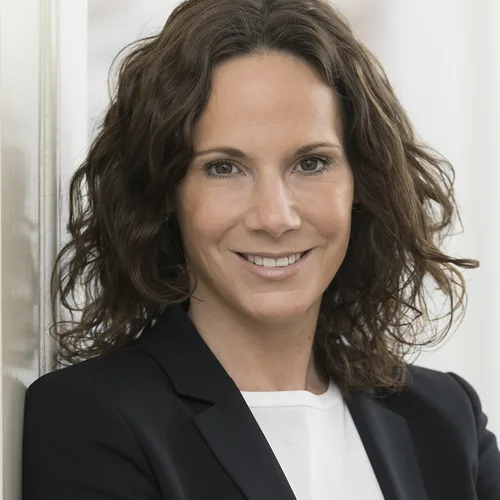
Jennifer Schmidt-Brekenfeld, Geschäftsführerin Tank & Rast GmbH
Autobahn Tank & Rast Gruppe GmbH & Co. KG
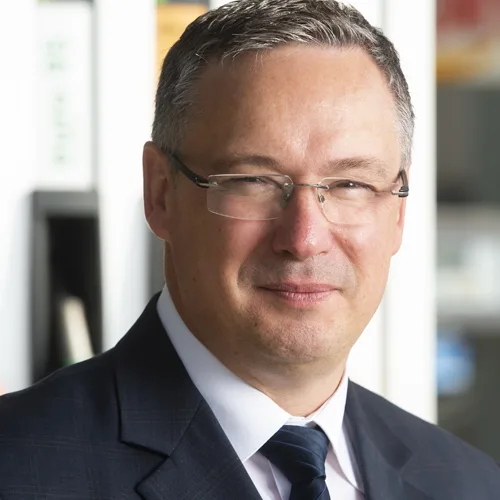
Patrick, Schnell, General Manager
Petro-Center SA / PC-Tank Sàrl
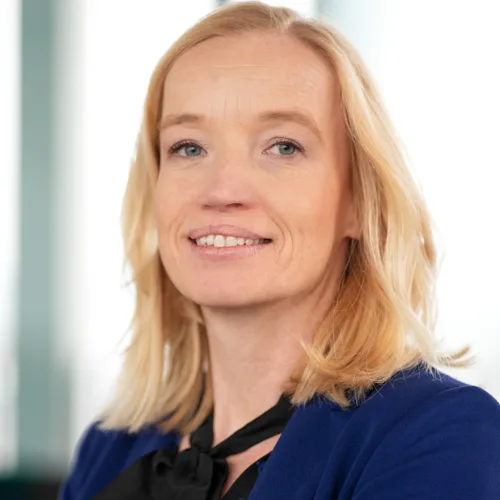
Sandra Schütte, Head of Mobility
Westfalen AG
Sandra Schütte has over 20 years of experience in the retail and food service sector, with more than 15 years of experience in the petrol station business. After graduating from the University of Bonn with a degree in “Dipl. Oecotrophologin” (Food Science and Oeconomics), she began her career as a product developer at a food agency. In 2008, she joined BP, where she held various positions in the areas of category management and sales. In her last position at BP, she was Global Food Service Manager, responsible for the food service strategy and a cross-border team. In November 2018, Sandra Schütte joined Westfalen AG, where she was responsible for convenience and car wash business of the Mobility division as Head of Convenience, Gastronomy and Services. On 1 January 2024, she took over overall responsibility for the Mobility division and became a member of Westfalen AG's management board.

GCVG Facilitator


Christian Warning, Founder and Managing Partner
The Retail Marketeers
Christian Warning is the founder and Managing Partner of The Retail Marketeers, a Hamburg (Germany) based consulting firm focused on retail convenience in its many forms. Christian, an alumni of the University of Hamburg , has for 13 years worked for Shell, eventually becoming the head of its billion-dollar non-fuel retail business in the German market. Following this, he oversaw the development of Germany’s largest convenience store franchise chain outside fuel stations at Deutsche Bahn (German railway). The Retail Marketeers are sought-after experts in the rapidly evolving roadside retail and mobility omnichannel business. The company uniquely combines a deep knowledge of daily operations with strategic insights while its boutique size guarantees focus and efficiency. Its ability to swiftly integrate retailer’s needs with vendor’s capabilities is at the core of a successful and cost-effective market-entry and transition strategy. For this, The Retail Marketeers create ideas and tailor-made processes, while putting clients in touch with just the right people to bring these ideas to life. Thirty plus years of hands-on industry best practice, together with an unprecedented network that encompasses manufacturers, wholesalers and pivotal company executives make the company a powerful ally for any convenience venture.
Christian is the chair of the Swiss Convenience Retail and forecourttech, the global leading pure tech focused matchmaking conference for the convenience & mobility industry.
Christian is the NACS Relationship Partner for German speaking markets (D-A-CH) and the proud host of the annual NACS Convenience Leaders Exchange in Hamburg. As an advisory board member to 2 global acting petrol station specialists he visits more than 1,000 gas stations and convenience stores in many different countries yearly.
Christian serves as the chairman for the mobility gastronomy vertical within the ICA Network in Germany. With more than 350 members, the ICA Executive Network is a strong community and sets standards as a networking platform where the top management levels of food service companies meet for regular events.
Become an Ally Member
Ally Members develop and nurture long term relationships with Vision Group members, playing an integral part in the discussion topics and member recruitment.
VGN Ally Members voices are heard in Vision Reports and websites, podcasts, social media, and industry media and events.
Be part of the conversation. Share Today to Shape Tomorrow. Become an Ally Member today!