As convenience retailers continue expanding foodservice offerings, the 2026 NACS Food Safety Forum, held April 13-14, 2026, reinforced one clear message: food safety is no longer simply an operational requirement. It is a strategic business imperative tied directly to consumer trust, brand protection and sustainable growth for each company, as well as the convenience industry as a whole.
Just before the NACS State of the Industry (SOI) Summit, I attended this Food Safety Forum which was attended by about 70 retailers and suppliers. The quality of discussion among the attendees and the detailed presentations were noteworthy.

Here are some of my top takeaways:
1 The Food Supply Chain Is Increasingly Complex
As convenience retailers evolve into sophisticated foodservice operators, the supply chain has become dramatically more complicated. Multi-source ingredients, fresh prepared foods, commissary operations, global sourcing, labor shortages, and transportation disruptions all increase risk exposure.
Forum discussions emphasized that every additional ingredient, supplier, and distribution touchpoint creates another potential vulnerability, from contamination and temperature control failures to allergen cross-contact and traceability gaps. Retailers can no longer view food safety as only a store-level issue; it must be managed across the entire supply ecosystem.
Speakers also highlighted that foodservice innovation increases operational risk if food safety controls do not evolve at the same pace.
2 Ingredient Sourcing and Third-Party Supplier Verification Are Essential
The Forum reinforced the growing importance of rigorous supplier verification programs and science-based sourcing standards. Retailers are being held accountable not only for what happens inside the store, but also for the integrity of every ingredient entering their system.
Third-party audits, supplier certifications, traceability systems, and verification protocols are becoming foundational requirements rather than optional safeguards. This is especially critical as retailers expand fresh food offerings and private-label programs.
Allergen management emerged as a major focus area. Proper labeling, supplier transparency, and cross-contact prevention are essential to protect consumers and reduce liability risk.
Also, I learned that sesame is the most prevalent allergen retailers must manage, while dairy is the most lethal allergen due to the severity of allergic reactions.
3 Food Safety Must Become Part of Company Culture
One of the strongest themes throughout the Forum was that food safety cannot succeed through policies alone, it must become embedded into organizational culture.
The comments from a panel discussion with Weigel’s CEO Doug Yawbery and Kwik Trip CEO/President and Chairman Dr. Scott Zietlow, facilitated by Kwik Trip Chief Science Office Dr. Jay Ellingson, were enlightening to everyone.
Retailers were encouraged to move beyond “check-the-box” compliance and create environments where associates understand the why behind food safety procedures. Leadership behavior, training consistency, and accountability systems that directly influence execution at store level were emphasized.
Building a culture of food safety means empowering employees, reinforcing safe behaviors daily, and ensuring food safety. Middle managers and store leaders also play a critical role in shaping this “food forward” culture of continuous improvement.
4 AI, Technology and Science Will Shape the Future of Food Safety
Technology and data-driven systems are rapidly becoming indispensable tools for managing food safety risks. AI, predictive analytics, automated temperature monitoring, digital inspections, and real-time compliance tracking can improve consistency and reduce human error.
Automation and smarter monitoring systems can help combat labor challenges while improving accuracy, traceability, and compliance across increasingly complex operations.
5 The Convenience Foodservice Industry Needs Science-Backed Standards
As convenience foodservice becomes more common, the industry faces increasing scrutiny from regulators, consumers, and public health stakeholders. Forum speakers emphasized the importance of developing standardized, science-based food safety practices that can scale across the industry.
This includes stronger allergen controls, standardized temperature management practices, validated sanitation procedures, and updated regulatory guidance aligned with modern foodservice operations. The industry’s future growth depends on building consumer confidence through measurable, evidence-based food safety systems.
The message was clear: convenience retailers can no longer compete solely on speed and convenience. Trust, transparency, and scientifically validated food safety standards are becoming core differentiators. As NACS President and CEO Frank Gleeson said when he opened the program, foodservice is the growth engine that will differentiate stores beyond fuel and from competitors like QSRs.
MORE FROM VGN
Latest Vision Reports from VGNBROWSE VISION REPORTS
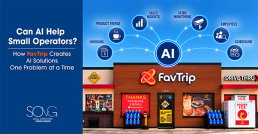
Can AI Help Small Operators? How Favtrip Creates AI Solutions One Problem at a Time
The September SOVG Vision Report explores how a small operator built practical AI tools to catch billing errors, streamline invoice reconciliation, spot trending products, and improve hiring, while offering a clear roadmap for other operators to start small, stay disciplined, and free up time for growth.

Strait Talk: The Outlook for the Global Energy Market
The Outlook for the Global Energy Market The September CLVG Vision Report examines a global energy market reshaped by refining capacity losses rather than crude oversupply. Analysts weigh hurricane risk against record refinery run rates, an uncertain Strait of Hormuz, and unpredictable Chinese demand, while offering strategies for retailers to diversify fuel supply and prepare for volatility.

From Signal to System: How C-Store IT Leaders Are Turning Data Into Operational Intelligence
The CTVG July Vision Report examines how c-store IT leaders can move beyond collecting and connecting data to building trustworthy infrastructure and leveraging AI to turn operational signals into actionable business insights. Topics include semantic layers, data governance, AI prompting best practices, hallucination risks, and real-world retailer experiments already delivering results.
Latest VGN Lens Articles
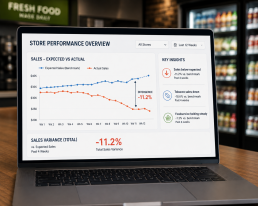
A Local Problem, and a Local Answer
Illegal tobacco sales often stay hidden in store data until losses are already severe. Operators can build an expected sales benchmark from existing POS data to catch illicit trade intrusion early, then turn that customer loss into a foodservice growth opportunity.

NACS Convenience Summit Europe in Warsaw Poland
Myra Kressner reflects on attending the NACS Convenience Summit Europe in Warsaw, Poland, where networking with VGN members and global retailers, along with store tours across fuel stations, convenience chains, and foodservice concepts, reinforced how customer experience and destination shopping continue to shape convenience retailing worldwide.
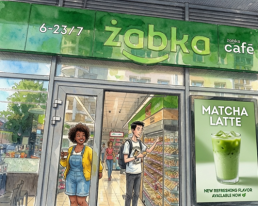
Generation Żabka: The Next Wave of Convenience
Lonnie McQuirter recounts a visit to Żabka Group's Warsaw headquarters, examining how the Polish convenience giant built retail media, app-based loyalty, and autonomous Nano stores into new growth engines. McQuirter draws transferable lessons for independent operators, from auditing fixed assets to finding the small, unglamorous gaps in a customer's day worth closing.