When I think about what makes a convenience store operator successful in foodservice, I think about the operators who truly understand who they are, and more importantly, who they are not. The industry has great examples with a long track records of success.
The fundamentals that made those operators successful thirty-five years ago are still the fundamentals that drive successful convenience foodservice today. Equipment has evolved. Packaging has improved. Menus have expanded, but the core principles have not changed nearly as much as people think. The operators who continue to win are the ones who execute the basics better than everyone else.
One of the biggest mistakes in convenience foodservice today is the belief that operators need to become all things to all people. That mindset creates operational chaos, inconsistent execution, confused consumers, and ultimately mediocre food.
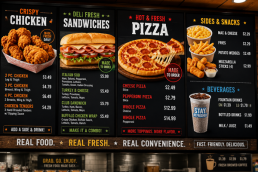
The reality is simple; the best foodservice operators stay in their lane. They identify a cornerstone product category, become exceptional at it, build a customer identity around it, and then carefully expand from there.
Too many operators approach foodservice like a giant menu board that has to offer Mexican, Asian, burgers, chicken, pizza, bakery, sandwiches, and every other category imaginable all at once. Consumers do not reward confusion. They reward confidence, consistency, and specialization.
I often compare successful foodservice to a carnival or state fair. At a fair, nobody expects every booth to sell everything. One stand is known for funnel cakes. Another for turkey legs. Another for corn dogs. Another for lemonade. People go to specific places for specific cravings. The exact same thing happens in convenience store foodservice.
Consumers mentally associate brands with signature products. Buc-ee’s is associated with brisket. Wawa is known for hoagies. 7-Eleven built its identity around hot dogs and roller grill items. Casey’s is famous for their pizza. Sheetz became known for indulgent made-to-order food.
Those cornerstone products become the magnet. The rest of the menu should support the cornerstone, not compete against it. That is where many operators fail. They build menus instead of building identities. A menu is not a strategy; a signature is a strategy.
The best brands stretch carefully from their core. They do not abandon it. One of the most important questions every convenience operator should ask before launching a foodservice program is incredibly simple, “Would I personally want to eat this regularly?” If the answer is no, then perhaps the product belongs in packaged food, not foodservice. Consumers grade packaged food differently than they grade prepared foodservice. Consumers expectations of packaged sandwiches, packaged pastries, roller grill products, and grab-and-go snacks are often designed around convenience and speed.
The moment a product transitions from packaged food into prepared foodservice, the standard changes completely. Consumers no longer judge the product simply on convenience. They begin evaluating freshness, quality, consistency, authenticity, speed, presentation, aroma, and overall execution. In foodservice, expectations are significantly higher because the experience itself becomes part of the product.
Foodservice creates a much higher emotional expectation from the consumer and operationally, complexity challenges consistency. Many operators dramatically underestimate the operational burden created by oversized foodservice menus. Every additional menu category increases training complexity, labor requirements, prep procedures, food safety risks, inventory management challenges, spoilage and waste, equipment requirements, execution inconsistency, ticket times, and staffing pressure.
Most convenience retailers are already labor constrained. The broader the menu becomes, the harder it becomes to execute consistently. A business trying to serve pizza, chicken, burgers, Asian food, bakery items, sandwiches, and Mexican food simultaneously often ends up needing multiple ovens, fryers, holding cabinets, prep tables, refrigeration systems, ventilation systems, larger storage areas, and broader ingredient inventories. At some point, the operation stops becoming efficient and starts becoming operational chaos. Great foodservice is often operationally repetitive.
The best operators are masters of consistency: same process, same execution, same standards, every day, every shift. Simplicity creates operational excellence. Operational excellence creates consistency. Consistency creates consumer trust. Consumer trust creates repeat business.
The operators who win will not be the ones attempting to sell everything. They will be the ones known for something. Because consumers do not remember giant menus. They remember signatures.
“They have the best brisket.”
“They make a great sub.”
“Their pizza is surprisingly good.”
“They have unbelievable chicken.”
That is how successful foodservice brands are built.
Stay in your lane. Master your cornerstone. Then expand intelligently from there.
MORE FROM VGN
Latest Vision Reports from VGNBROWSE VISION REPORTS
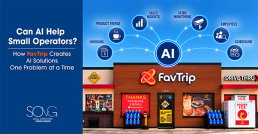
Can AI Help Small Operators? How Favtrip Creates AI Solutions One Problem at a Time
The September SOVG Vision Report explores how a small operator built practical AI tools to catch billing errors, streamline invoice reconciliation, spot trending products, and improve hiring, while offering a clear roadmap for other operators to start small, stay disciplined, and free up time for growth.

Strait Talk: The Outlook for the Global Energy Market
The Outlook for the Global Energy Market The September CLVG Vision Report examines a global energy market reshaped by refining capacity losses rather than crude oversupply. Analysts weigh hurricane risk against record refinery run rates, an uncertain Strait of Hormuz, and unpredictable Chinese demand, while offering strategies for retailers to diversify fuel supply and prepare for volatility.

From Signal to System: How C-Store IT Leaders Are Turning Data Into Operational Intelligence
The CTVG July Vision Report examines how c-store IT leaders can move beyond collecting and connecting data to building trustworthy infrastructure and leveraging AI to turn operational signals into actionable business insights. Topics include semantic layers, data governance, AI prompting best practices, hallucination risks, and real-world retailer experiments already delivering results.
Latest VGN Lens Articles
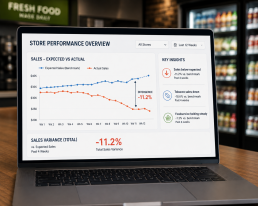
A Local Problem, and a Local Answer
Illegal tobacco sales often stay hidden in store data until losses are already severe. Operators can build an expected sales benchmark from existing POS data to catch illicit trade intrusion early, then turn that customer loss into a foodservice growth opportunity.

NACS Convenience Summit Europe in Warsaw Poland
Myra Kressner reflects on attending the NACS Convenience Summit Europe in Warsaw, Poland, where networking with VGN members and global retailers, along with store tours across fuel stations, convenience chains, and foodservice concepts, reinforced how customer experience and destination shopping continue to shape convenience retailing worldwide.
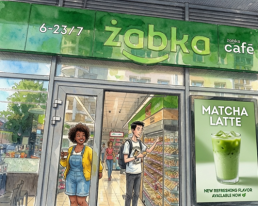
Generation Żabka: The Next Wave of Convenience
Lonnie McQuirter recounts a visit to Żabka Group's Warsaw headquarters, examining how the Polish convenience giant built retail media, app-based loyalty, and autonomous Nano stores into new growth engines. McQuirter draws transferable lessons for independent operators, from auditing fixed assets to finding the small, unglamorous gaps in a customer's day worth closing.