On August 25-26th I had the pleasure of attending the McLane Engage event in Dallas.
The program included a thought-provoking keynote on AI from Sol Rashidi, sharing her experience as the world’s first AI officer, and currently Senior Fellow at Harvard, CSO AI & Data at Cyera, and CDAO & AI Advisor at Deloitte. Her message was both exciting and cautionary: AI has enormous potential, but the real competitive advantage will come from how we use it, not simply from using it more.
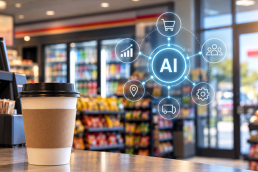
Four AI takeaways that stood out:
1 AI can augment and anticipate efficiency.
AI can do far more than automate repetitive tasks. It can help organizations anticipate needs, identify opportunities and make processes more efficient. The opportunity is to move from simply reacting to what is happening to anticipating what comes next.
2 Never outsource critical thinking to AI.
This was perhaps the most important warning. If we allow AI to do all of our thinking, our ability to think critically can deteriorate. AI should be a powerful partner but human judgment still needs to be in the driver’s seat.
3 Use AI to amplify creativity and critical thinking.
Rather than viewing AI simply as a productivity tool, we should use it to expand what people are capable of doing. The best applications may be those that help teams generate more ideas, challenge assumptions, see patterns, and arrive at better decisions.
4 Measure effectiveness and value — not simply “more.”
One of Sol’s observations that particularly resonated with me was the distinction between productivity and effectiveness. Doing more does not necessarily mean creating more value. As AI enables us to accomplish tasks faster, the more important questions become: Are we doing the right things? Are we creating better outcomes? And are we delivering greater value to the customer?
The day when “using AI” becomes irrelevant
Another intriguing observation came during a technology and AI panel featuring Tanya Coutray, McLane’s VP CIDO Retail; Sid Kulkarni, VP data & AI, and Yasaswi Pulvarti, VP customer care.
The panel suggested that “using AI” will soon disappear from our vocabulary because it will simply be assumed.
Think about how we talk about taking a photograph. We don’t say, “Take a photo using your smartphone.” We simply say, “Take a photo.” The technology enabling it is understood.
According to this panel, AI is likely headed in the same direction. Soon, we may not talk about whether a retailer, supplier, or technology company is “using AI.” AI will simply be embedded in the tools we use, the decisions we make, and the customer experiences we create.
What does this mean for convenience retail?
AI has the potential to influence virtually every part of the convenience ecosystem from merchandising, pricing and promotions to inventory, forecasting, foodservice, customer engagement, labor optimization, and supplier relationships.
But the winners won’t necessarily be the companies with the most AI. They will be the companies that know where AI can create meaningful value and where human experience, judgment, creativity, and relationships remain irreplaceable.
The conversation is quickly moving beyond “Should we use AI?” to a much more important question: “How can we use AI to make better decisions, create better experiences and deliver greater value?”
MORE FROM VGN
Latest Vision Reports from VGNBROWSE VISION REPORTS
Standing Out in a Sea of Sameness
Convenience retailers are rethinking growth beyond fuel, with leaders focused on foodservice, private label, and self-service technology as ways to build stronger customer relationships. GCVG September Vision Report highlights how modular store formats, local marketing, and disciplined category strategy strengthen brand credibility, while charging infrastructure and non-fuel services point toward where future margin growth will come from.
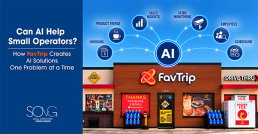
Can AI Help Small Operators? How Favtrip Creates AI Solutions One Problem at a Time
The September SOVG Vision Report explores how a small operator built practical AI tools to catch billing errors, streamline invoice reconciliation, spot trending products, and improve hiring, while offering a clear roadmap for other operators to start small, stay disciplined, and free up time for growth.

Strait Talk: The Outlook for the Global Energy Market
The Outlook for the Global Energy Market The September CLVG Vision Report examines a global energy market reshaped by refining capacity losses rather than crude oversupply. Analysts weigh hurricane risk against record refinery run rates, an uncertain Strait of Hormuz, and unpredictable Chinese demand, while offering strategies for retailers to diversify fuel supply and prepare for volatility.
Latest VGN Lens Articles

Strait Shot – How Does Hormuz Affect Global Fuel Supply?
Roy Strasburger takes a closer look at how the closure of a key oil shipping route and shrinking global refining capacity are combining to reshape fuel supply. While the shipping chokepoint grabs headlines, losses in refining tied to regional conflicts, aging plants, and new sanctions are cutting deeper into refined product availability, leaving little room to absorb future disruptions even if shipping routes fully reopen.
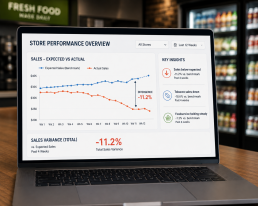
A Local Problem, and a Local Answer
Illegal tobacco sales often stay hidden in store data until losses are already severe. Operators can build an expected sales benchmark from existing POS data to catch illicit trade intrusion early, then turn that customer loss into a foodservice growth opportunity.

NACS Convenience Summit Europe in Warsaw Poland
Myra Kressner reflects on attending the NACS Convenience Summit Europe in Warsaw, Poland, where networking with VGN members and global retailers, along with store tours across fuel stations, convenience chains, and foodservice concepts, reinforced how customer experience and destination shopping continue to shape convenience retailing worldwide.