Managing the Duck Curve
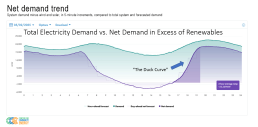
Torre-Bueno presented a compelling case for how bidirectional electric vehicles, when intelligently managed, could reshape California’s energy future and allow ratepayers to avoid billions of dollars in grid upgrades. He framed the core tension in California’s current energy system: an ambitious goal of eight million light-duty EVs on the road by 2030 and a mandate to make renewable energy the predominant source of electricity in the state. The problem is the infamous “duck curve,” the sharp evening spike in electricity demand that occurs as solar generation drops off and residents return home causing non-solar power plants to ramp up production to meet the demand. Left unmanaged, EV charging would make this problem significantly worse.
“The state is simultaneously enunciating one goal and planning for a different future and that different future is going to require a lot of investment.”

Modeling from the California Energy Commission (CEC) shows that if drivers plug in when they get home, the resulting surge of residential Level 2 charging would hit precisely at the worst moment. Despite state policy favoring daytime “EV happy hour” charging, official projections still anticipate the highest load occurring in the evening. However, the California Public Utilities Commission (CPUC), which is responsible for planning and building the grid infrastructure and is concerned about electrifying buildings as well as cars, has decided that massive costly upgrades will be needed for energy distribution centers to meet the increase in residential electricity consumption.
The scale of what bidirectional EVs could offer is striking. Car manufacturers have promised to make the next generation of vehicles bidirectional, and California has a law to mandate this. The battery capacity currently sitting in California’s existing EV fleet exceeds what would be needed to manage the duck curve through 2030. Most of this capacity is not accessible today since most cars are not bidirectional, but that could change with a few technological innovations. Torre-Bueno’s modeling shows that just 28% of the theoretical discharge capacity of five million EVs currently in California, if accessible, would be sufficient to shave the evening peak entirely. However, it would only take 12% of the capacity of the expected future EV fleet to carry the grid through the night.
An alternative vision Torre-Bueno advocates is to place solar generation over workplace parking lots, charge EVs while their owners are at work, and let those vehicles carry the energy home. At that point, a relatively small number of bidirectional EVs could flatten the evening peak without any new transmission infrastructure. As for drivers in multi-unit dwellings without charging capabilities, he asserts that the wider availability of daytime charging at work would be sufficient, in addition to public charging when needed, for both V2G and the operation of the vehicle, therefore alleviating a social justice concern as well as keeping the charging revenue in the local community rather than it going to the utilities. Local solar production would also eliminate the rate increases that would otherwise be required to fund a massive, centralized grid buildout.
Torre-Bueno was careful to note that battery stress under this model remains minimal, with vehicles never asked to surrender more than 30% of their charge. Testing has shown that the annual V2G battery charging cycling is well within normal operating parameters. Conveying this message to the public would help alleviate vehicle owners’ concerns about damage to their batteries.
What is Bidirectional EV Charging?
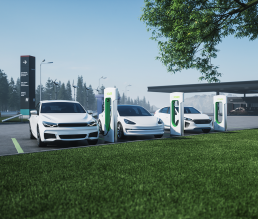
Bidirectional electric vehicles that can both charge and send power back out can act like mobile backup batteries. This can help a building stay powered during outages and reduce electricity use during high-demand times. These vehicles work with special charging equipment that allows electricity to flow both ways into the vehicle to charge it, and back out from the vehicle to power a building or other equipment. Not all EVs are bidirectional.
Bidirectional vehicles can send power back to buildings or specific equipment through vehicle-to-building (V2B) charging, and they can also send power back to the electric grid through vehicle-to-grid (V2G) charging.
V2B and V2G systems can work alongside solar photovoltaic (PV) systems and other distributed energy resources (DERs) or provide additional support beyond diesel backup generators.
Battery Stress and the 30% Threshold
 The first clarification sought was from Jay Smith, executive director with Charge Ahead Partnership, and his question centered on how the virtual power plant model (VPP: a network of decentralized energy producing devices such as solar) handles battery stress. Torre-Bueno confirmed that the 30% discharge threshold in his modeling is based on total battery capacity, not whatever charge a vehicle has at the time. He asserts that the model assumes EVs arrive home fully charged from daytime workplace charging. Additionally, in regard to battery lifetime health, Torre-Bueno said that having a completely full or empty battery, as well as using DC fast charging stations, stresses the batteries more than these V2G scenarios will.
Policy, Legislation, and the Regulatory Gap
The conversation focused next on the gap between what technology can already do and what state policy currently permits. Torre-Bueno walked through California’s SB 59, signed into law in September 2024, which originally aimed to mandate bidirectionality but was negotiated down to requiring the CEC to study the issue and mandate bidirectional vehicles if there is a beneficial use case.
Jed Prickett, clean energy analyst at Alliance for Clean Energy New York and guest of Deputy Director Deb Peck Kelleher, confirmed that New York state is actively planning for bidirectional charging through its Grid of the Future project but has no legal mandate in place. He notes that the bidirectional charging issue carries real cultural implications: “I can see people waging a culture war saying, ‘oh, now they’re coming for our mobility,’ by saying they want to take away our electrons in the night.” Karen Apple, electric vehicle program manager for the City of Phoenix, commented that the Ford F-150 Lightning serves as a frustrating example as the truck was technically capable of powering a home or selling electricity back to the grid, but utility company resistance, and a pattern Torre-Bueno described as “death by pilot,” prevented broad adoption. “Technology is way ahead of regulation,” he said plainly.

According to The Climate Center, California Law “SB 59 authorizes the California Energy Commission (CEC) to require that classes of electric vehicles (EVs) sold in California have bidirectional charging capability, which makes it possible to use the enormous amount of energy stored in EV batteries to shore up the power grid and back up homes and businesses as the state faces more outages from climate extremes.”
Consumer Incentives and Driver Behavior
Roy Strasburger, CEO of StrasGlobal, president of Compliance Safe, and VGN co-founder, inquired what financial motivation would actually move driver behavior. Torre-Bueno answered that many homeowner drivers are already realizing the cost benefits of their home VPPs. Referencing his presentation, daytime electricity in San Diego currently costs around fifteen cents per kilowatt hour (kWh), while evening residential rates continue to rise at or above 80 cents per kWh. Any driver with a bidirectional vehicle who charges during the day and uses that stored energy at home between 4 and 9 p.m. is already performing a valuable arbitrage, he asserts.
Tom Healey, VP of facilities at Nouria Energy Corporation, also tapped into the question of what would motivate a driver to plug in at home to give back to the grid if they are already fully charged from the workday? Apple noted she appreciates and uses the Level 1 charge opportunity at work, even if she does not actually need to charge. Bueno-Torres noted he is continuing to study this conundrum which includes consumer’s skepticism about whether they will void the manufactures’ warranty if they damage the battery by plugging in too often. The challenge, as Bueno-Torres and Smith noted, is finding the right incentives. Smith also noted that individual consumer behavior is far harder to predict and shape than fleet operations. “When you control the fleet, you have a lot more options,” Smith said, pointing to companies like Amazon and UPS as models for what coordinated bidirectional charging could look like at scale.
Retail and Fleet Opportunities
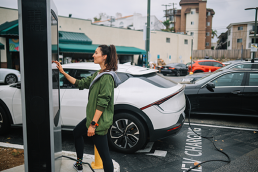
“I think there’s a little bit of a lull right now at the convenience store industry to really drive installation of EV charging stations. And, we still have the challenge of making it a viable and profitable core business versus motor fuels and [in the] convenience store. I think battery technology, if that continues to improve and we can add storage at the site so that we can control the time of use and demand charges, would be helpful to us.”
What if EV drivers could plug in and sell power to businesses and what might incentivize either of them to do that? It depends, evVG members said. For businesses with fleets, it would make sense for their own fleet of vehicles to power their own buildings, charging again at when rates are lower. As Niese pointed out, school buses are another interesting use case for such a solution. But what is the opportunity for retailers? Would free parking, discounts, or free products entice drivers to sell them their electrons? Healey acknowledged the concept of buying electricity from cars was new to him but saw real potential for retailers, particularly for buffering demand charges during peak summer air conditioning loads. Smith noted that battery technology would need to mature further before widespread retail adoption. Torre-Bueno shared a pilot in Spain in which company vehicles automatically discharged electricity into a building to avoid demand charge spikes as proof that the concept will work. The more realistic near-term opportunity, the group agreed, lies with managed fleets rather than individual consumers stopping to sell electrons on a whim.
The Duck Curve Beyond California
The question of whether the duck curve is a solar-related, California-specific problem drew candid responses from participants in other markets. Apple confirmed that Arizona’s utilities are facing the same dynamic and noted that her boss introduced her to the duck curve on her first day on the job five years ago. Prickett added that in New York State, the duck curve is “very much at the forefront of the minds of people working on energy transition,” with the state’s planning processes already accounting for an increase in bidirectional charging as infrastructure develops. Torre-Bueno was clear that any state moving toward greater solar penetration will eventually face the same challenge, regardless of geography.
Grid Equity and Distributed Energy
The discussion also covered the economics and politics of distributed generation more broadly. Torre-Bueno stated that the fundamental justification for centralized grid monopolies and the argument that large-scale generation is inherently cheaper no longer holds true given the falling cost of solar generated energy and batteries. Yet utilities in California are actively working to restrict self-generation, including seeking the authority to fine customers who reduce their grid purchases. Currently, California only allows utility customers to use electricity generated on home solar units to reduce their grid demand, however, Torres-Bueno pointed out that utilities cannot prove where the EV was charged and they are therefore unable to correctly penalize a bidirectional EV driver for generating power at home on a G2V basis. As Strasburger joked, “bootleg electricity” can certainly travel across state lines, and it would be difficult to prove its origin.
Apple surfaced a parallel equity concern: since federal EV charging funds are currently frozen, NEVI program installations have stalled, and it is unlikely that private charge point operators will reliably serve low-income communities. Torre-Bueno echoed that concern, warning that without deliberate intervention, the solar energy transition risks producing a two-tier transportation system in which low-income households are left with aging internal combustion vehicles that manufacturers will eventually abandon. Apple stressed that universal access to charging points is necessary and that is why municipalities may need to step in.

Common Charge is a 501(c)(3) nonprofit coalition of innovators, businesses, and other energy-related nonprofits founded in 2025 to explore universally beneficial energy solutions. Members from solar, EV, advocacy, battery, and energy industries work together to tackle energy issues that are mutually beneficial for everyone. The Common Charge website provides straightforward resources for consumers, businesses, and policymakers. Learn more or get involved at commoncharge.org.
EV Sales, Fuel Prices, and What Comes Next
Myra Kressner, CEO of Kressner Strategy Group and VGN co-founder, asked Torre-Bueno about his prediction that by 2050, California would be without ICE vehicles. He clarified that California’s goal is to eliminate ICE vehicles by 2050, a rather ambitious and probably unattainable desire. As fuel prices rise, especially now with the war in Iran, EV sales should theoretically increase, speculated Strasburger. Torre-Bueno stated he believed used EV sales have already started to rise, especially in the used EV market. Smith noted that his organization, Charge Ahead Partnership, has joined Common Charge, a relatively new organization focused on decentralized energy resources and VPPs.
Final Reflection
A relatively small percentage of bidirectional vehicles, when intelligently managed, could eliminate billions of dollars in grid upgrades while flattening the very demand curve that threatens California’s clean energy ambitions, foreshadowing challenges for every state moving toward renewables. The greatest barriers are no longer engineering problems, but policy, utility resistance, and consumer behavior, all of which are solvable with the right regulatory will and incentive structures. The question is no longer whether bidirectional charging can reshape the grid, but whether people will change their habits to let it happen.
Video Presentation
Presentation (PDF)

KEY TAKEAWAYS
- California's EV fleet already holds enough battery capacity to solve the energy imbalance through 2030 without building a new transmission infrastructure but accessing it is a challenge.
- Daytime workplace charging paired with bidirectional EVs carrying energy to the home could flatten the evening demand spike, i.e., “Duck Curve,” entirely with no new infrastructure required.
- Some drivers are already arbitraging energy costs without even knowing it, charging at roughly 15 cents per kilowatt hour during the day and displacing evening rates at or above 80 cents.
- Technology is ready but policy is not. Utility resistance and watered-down legislation have slowed the adoption of virtual power plants (VPP) with vehicles capable of powering homes and selling electricity back to the grid. California utilities are actively working to block self-generation (using solar panels at home), even seeking authority to fine customers who reduce grid purchases, despite falling solar and battery costs undermining the case for centralized monopolies.
- Without public intervention, a two-tier energy system could leave low-income households with abandoned ICE vehicles as private EV charging companies are less likely to invest in underserved communities.
- Bidirectional EVs parked in retail lots could buffer costly demand charge spikes during peak hours, turning customer parking into a grid asset.
- Free parking, discounts, or product incentives could motivate drivers to plug in and sell electrons, but the more immediate and reliable opportunity is retailers deploying their own fleets to power their own buildings. Managed fleets, not individual consumers, like Amazon, UPS, and school bus fleets, represent what coordinated bidirectional charging can achieve at scale today.
Contact info@vgnsharing.com if you’d like the meeting transcript.
Notable and Quotable
“Somebody at the CEC said, oh my gosh, and that very interestingly is a piece of slang that has become a term of art.”
“We could look at when we have a large load for the building during the summer months when we’ve got heavy air conditioning usage and potentially look at having vehicles come in and charge directly to the building or to our battery storage that would buffer that demand.”
“Cars have very big batteries and you’ve already paid for them when you bought the car. So, it’s of all the ways of having local energy, vehicles seem to be the best one at this moment in California, and in general.”
“The typical daily commute is thirty miles [which is] the average daily commute in the U.S. Nobody will buy a car that doesn’t have 300 miles of range. So, everybody is putting all this money on the table to buy these batteries, which they’re not going to use most of the time.“
“The private market is never going to put them in low-income areas. And everybody should have fair access to charging.”
“We can’t lose sight of the fact that there’s also consumer behavior. We can control for so many different things, but we have to create incentives that actually influence consumer behavior.”
“I’m firmly in belief that the EVs are going to continue to grow. Right now, we’re in that low. We’re in a slow move up the mountain, but it’s still moving up, trending up, moving up, and we can’t stop putting chargers out.”
“In some of our other Vision Groups, we have spoken about AI and using AI for demand pricing on fuel, on hydrocarbons, and gasoline and so that you’re adjusting for the market or adjusting for drive times. And, it would seem to me that you can do a ‘buy or sell’ aspect if you have the right technology in place to be able to take it and to store it. But that might make it a really interesting open free market on creating energy if I decide I have enough spare capacity that if the price is right or I can get a free Snickers bar, I can do something with it.”
evVG Members
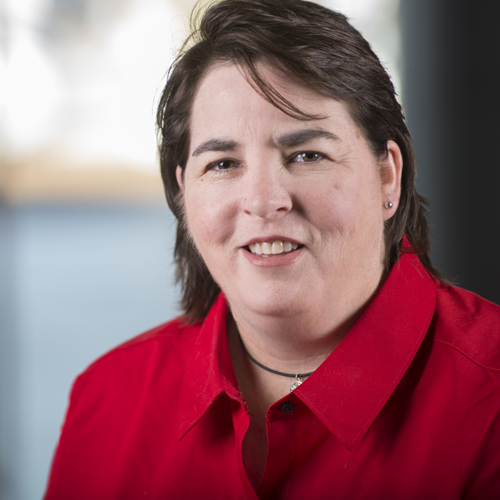
Karen Apple, Electric Vehicle Program Manager
City of Phoenix
Karen Apple has over a decade of experience and knowledge in public policy issues and project management related to transportation and the environment. Karen joined the City of Phoenix Office of Sustainability, as the Electric Vehicle Program Manager in March 2020 and manages the planning and program development of projects that support the accelerated adoption of plug-in electric vehicles (EVs). This work includes: developing EV education and awareness initiatives, implementing the installation of charging stations for public, and City workplace and fleet use, implementing EV-ready building codes; coordinating with City departments to integrate EVs into the fleet, and continuing to collaborate with other local, regional, and state stakeholders and utility partners to increase EV adoption and decrease air quality emissions. Prior to joining the City of Phoenix Office of Sustainability, Karen served as a Project Manager/NEPA Planner with the City of Phoenix Aviation Department since 2005. Ms. Apple holds a Master of Environmental Planning from Arizona State University and a Bachelor of Science in Public Policy – Transportation from Indiana University’s School of Public and Environmental Affairs.

Srijata Chattopadhyay, VP: Americas EV Charging
Shell Recharge
Srijata Chattopadhyay is a leader in the clean energy space. Currently, she serves as the general manager of the EV charging business at Shell, which owns and operates over 4,000 chargers in North America. She and her team are accountable for the charging P&L, driver experience, digital product, and marketing. In the clean energy space, Srijata has been a member of the executive team at Volta Charging, worked in Google's energy services and renewables division, and at Tesla. In her decade in the industry, she has served in a wide range of functions - global strategy, capital markets, head of technology and head of deployment. Srijata holds a BA in Economics from Barnard College and an MBA from Wharton. She lives in San Francisco with her husband and two sons (4 and 1).

Garrett Fitzgerald, Sr. Director, Transportation Electrification
Smart Electric Power Alliance
Garrett Fitzgerald is a seasoned expert in transportation and building electrification, bringing over a decade of experience in advancing clean energy solutions. Since joining SEPA in 2021, Garrett has led efforts to drive beneficial electrification of transportation and buildings, working with utilities and stakeholders to enable a smooth transition to a highly electrified, low-carbon future. Now serving as Senior Director of Transportation, he oversees strategy execution, industry engagement, and the development of research and content to accelerate electrification.
Prior to SEPA, Garrett spent eight years at Rocky Mountain Institute, where he built and led the electricity program in India, accelerating electric vehicle adoption and clean energy integration. He managed RMI's Fleet Electrification program, co-led the EV-Grid initiative, and contributed to key projects on energy storage, distributed solar, and load flexibility. His expertise spans EV charging infrastructure, EV-specific tariff design, energy storage, and demand-side flexibility.
Garrett holds a BS in Mechanical Engineering from Santa Clara University and both an MS and a Ph.D. in Earth and Environmental Engineering from Columbia University, reflecting his deep commitment to advancing sustainable energy systems.

Tom Healey, VP Facilities
Nouria Energy Corporation
Tom is an accomplished retail development executive with focus on site evaluation, design, permitting and construction. A leader by example who manages a team of technical staff in all aspects of facility development, maintenance, and environmental compliance.
Tom's strong business and technical knowledge enable him to understand, communicate and achieve the objectives of the various project stakeholders.
Tom has been involved with all aspects of Nouria's EV charging strategy and implementation. Nouria has installed has installed DCFC charging stations at eight of its convenience stores and has 25+ more installations planned or in progress.
Tom is a licensed Professional Engineer and Construction Supervisor and is involved in several industry associations.
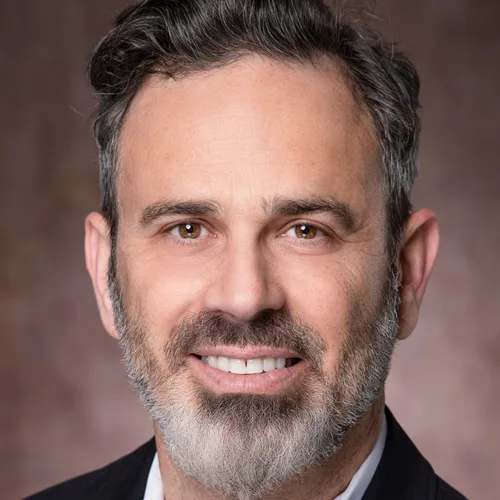
Gabe Klein, Former Executive Director
U.S. Joint Office of Energy & Transportation
Gabe Klein is a government official, urban planner, entrepreneur, and an investor specializing in sustainability and transportation.
Klein currently serves in the Biden Administration as the head of the Joint Office of Energy and Transportation. In this role, he has worked to enable the roll-out of a national electric vehicle charging network and electric school and transit busses in the U.S. Klein–who supports a $19 billion budget in this position–is the first-ever Executive Director of the Joint Office, also the first office in the federal government to span multiple agencies.
Previously, Klein co-founded Cityfi, a consultancy that works with local governments, foundations, and venture-backed startups. He was also the Commissioner of the Chicago Department of Transportation (CDOT), and the Director of the District of Columbia Department of Transportation (DDOT). Before those roles, Klein was an Executive with Boston-based Zipcar. He authored the book Start-Up City: Inspiring Private and Public Entrepreneurship, Getting Projects Done, and Having Fun.

John H. Kwon, General Counsel
CATL
As General Counsel of Global Legal & Strategy, Representative Director and Board Chairman of the largest manufacturer of EV and ESS batteries in the world, I am committed to implementing supply chain solutions to the manufacture and deployment of lithium Iron Phosphate (LFP) and MNC cells for world markets. Previously, I oversaw global investments and acquisitions for the biggest logistics player in Asia, which culminated in the USD 2.3 Billion acquisition of Kerry Logistics in 2022 and its IPO on the HKSE in 2023. Qualified to practice law in four jurisdictions, I started my career at a magic circle firm and progressed to the position of General Counsel at a Forbes 50 MNC, where we project managed the building of many iconic buildings across the globe. My legal journey has also afforded me to assume cross-functional and P&L positions having served as CEO & Board member to NYSE & ASX listed MNCs.
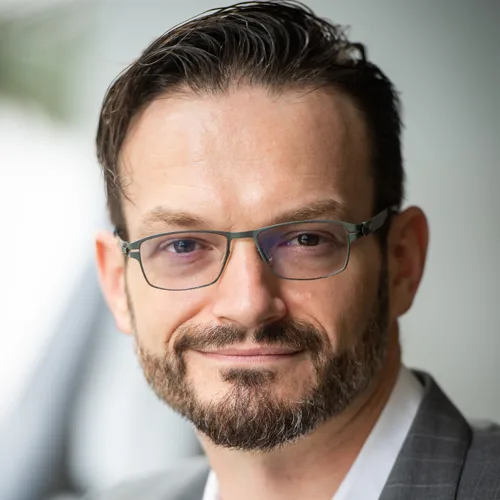
Chris Normandeau, Director
FirstService Energy
Chris Normandeau is director of FirstService Energy in the East region. Normandeau collaborates with community associations managed by FirstService Residential to reduce energy and water use and costs by serving as a trusted advisor to boards. Normandeau helps clients make informed decisions—saving them money, minimizing their carbon footprint, and improving their quality of life.
Prior to joining FirstService Energy, Normandeau was co-founder of Core, a New York City-based sustainable project management firm which focused on maximizing client savings while minimizing environmental impact. He also served as a Project Manager for construction firm OmniBuild, where he was involved in all aspects of design, construction and budgeting, including overseeing energy efficiency projects across New York State. Normandeau, who earned a B.S. in Mechanical Engineering from Rensselaer Polytechnic Institute, is a Certified Energy Manager (C.E.M.), is Lighting Certified (LC), and is a LEED AP BD+C®. He has saved his clients more than 100 million dollars by putting his considerable energy knowledge and expertise to work for them. Normandeau believes in the value of providing his clients with the tools and knowledge needed to continue reducing their carbon footprint, long after his energy savings initiatives have been put in place.

Kimberly Okafor, General Manager of Zero Emission Solutions
Trillium - A Love's Company
Kim Okafor is the General Manager of Zero Emission Solutions for the Love’s Family of Companies which includes Trillium Energy. Kim leads the strategy, development, and management of the EV charging, hydrogen fueling, and energy strategy businesses for the organization. Kim also leads the acquisition of grant funds for the organization. Under Kim’s leadership, Trillium and Love’s have increased its hydrogen portfolio to 5 fueling stations, it’s EV charging portfolio to over 230 ports, and acquired over $40M in grants funds.
Kim also actively serves on the Board of Directors for the California Hydrogen Business Council and has an Electrical Engineering degree from the University of Houston. Kim’s goal as the General Manager of Zero Emission Solutions is to develop economically sustainable business opportunities for our customers.

Darren Palmer, Global VP Electric Vehicle Programs
Ford Motor Company
Darren Palmer is the Global Vice President for Electric Vehicle Programs at Ford. He is responsible for all global programs current and future models.
Palmer led the inception and development of all of Ford’s current electric vehicles – the best-selling F-150 Lighting, Mustang Mach-, E-Transit, Electriic Explorer, Puma and the industry first, all-road sport SUV, the Mach-E Rally.
Palmer's key focus is developing products and experiences that resonate with consumers. He inspires large & diverse teams across multiple continents to deliver these products to global markets. His portfolio includes multiple award-winning vehicles, that are leaders in their field.
With extensive experience in global product development, Palmer has held positions in product development, product planning, manufacturing, and quality in the United Kingdom, Germany, and the United States. His work has also involved regular travel to South America, China, India, and Australia.
Recognized as a Motor Trend "Software Defined Vehicle" industry leader and part of the Automotive News Rising Star alumni, Palmer has cultivated a global network of industry colleagues.
He holds an MBA from Henley Management College, England, an electrical, electronics, and technology degree from Birmingham University, England, and is a member of the Institute of Engineering Technology (IET).

Deb Peck Kelleher, Deputy Director
Alliance for Clean Energy NY
Deb Peck Kelleher is excited to be working on clean energy policy after over 20 years with the New York State Legislature, with 10 of those years as the Committee Director for the Senate Environmental Conservation Committee, and the Senate Investigation and Government Operations Committee. She has worked on the net- metering law, the electric vehicles tax credit, and the reorganization of the Long Island Power Authority. She has extensive experience in New York State environmental policy and worked closely on expanding the Environmental Protection Fund, the drafting and passage of the State’s Brownfield Program, the Community Preservation Act, the Invasive Species Council, the phase out of MTBE from gasoline, and the protection of Long Island’s sole source aquifer. She was also the Director of the Senate Education Committee, Alcoholism and Addiction Committee, and the Infrastructure Committee.
She leads ACE NYs energy efficiency, transportation electrification work. Deb holds a Master's Degree in Environmental Policy from the University of Wisconsin - Green Bay with a focus on environmental economics and a B.A. in economics from LeMoyne College.
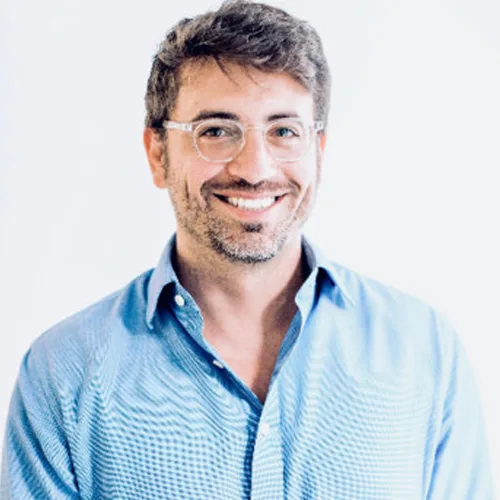
Francisco Pineda, COO and EVP for Business and Operations
The New School
Francisco X. Pineda is a faculty member at Columbia University and Executive Vice President (Deputy Commissioner) at the New York City Economic Development Corporation where he oversees NYC's largest real estate (60 million square feet) and waterfront ports portfolio as well as the largest urban de-carbonization program in the USA. He is also a Fellow of the Royal Institution of Chartered Surveyors (UK) and his research and professional interests lie in organizational intelligence, critical capabilities, and the structuring and management of complex project-based teams and enterprises.
In his twenty-year career, he has worked on all aspects of the development cycle—investment, development, and construction. He has led and turned around property development companies and construction projects, as well as businesses in hospitality, building materials, energy and more recently in climate-tech focused on waste valorization in Mexico.
His early career included corporate strategy roles at Hess as well as investment banking and private equity at Merrill Lynch. He was also engaged to lead one of the Middle East’s largest corporate recovery initiatives working alongside Shearman & Sterling and Moelis & Co. on restructuring a $1.6 billion real estate portfolio.
He holds an MBA in Finance from Columbia Business School, an MPA in Applied Economics from Columbia University’s School of International and Public Affairs and a BA in History. He is currently pursuing his PhD in Urban Systems at NYU’s Tandon School of Engineering advancing his research on Sustainable Regional Systems and the intersection of finance, technology, and governance and has completed advanced courses at the US Naval War College in Newport, RI.
In 2018, he was selected as a Presidential Leadership Scholar by the Clinton‐GW Bush‐HW Bush‐LBJ Foundations and continues to serve as a US Navy (Reserves) supply and logistics officer attached to US Forces Korea in support of Joint Logistics and the UN and with previous operational tours to Africa in support of Global War on Terror Operations and Asia in support of large-scale war game exercises in the Pacific.
He has served on several boards, industry committees, and as a senior advisor:
- NYC Mayor Task Force, Assessment and Recommendations of NYC Contracting and Procurement Reform
- MTA, Member of the Major Construction Review Unit
- Biden Infrastructure Policy Committee 2020
- World Economic Forum, Infrastructure 4.0
- Urban Land Institute’s (ULI-NY) Program Steering Committee
- Cities4All Global Leaders Council (Ford Foundation, UN-United Cities & Local Government)
Selected Projects & Deal Experience
- New York MTA (Metropolitan Transportation Authority) +$11 billion East Side Access Ops Readiness Review: Member of the MTA’s Major Construction Review Unit (MCRU)
- New York MTA (Metropolitan Transportation Authority) ~$2 billion Penn Station Access Project: Appointed member of the MTA’s Major Construction Review Unit (MCRU)
- $4 billion Delta/La Guardia Airport Reconfiguration Plan (NYC) Advisor to General Superintendent on Field Training and Development
- $7 billion Columbia University Manhattanville Development (NYC) Advisor on Sub-contractor Diversity Procurement and Development, MWBE
- $1.6 billion Restructuring of Sovereign Wealth Fund Real Estate and Construction Portfolio SVP Investment and Development and Executive Restructuring Committee (Infra, Hospitality, F&B, and Luxury Resi Assets)

Laura Renger, Executive Director
CalETC
Laura Renger is the Executive Director of the California Electric Transportation Coalition (CalETC). In this role, Laura leads the dedicated team of CalETC professionals responsible for all aspects of the organization’s legislative and regulatory advocacy. Together with the CalETC board and members, CalETC supports and advocates for the transition to a zero-emission transportation future to spur economic growth, fuel diversity and energy independence, contribute to clean air, and combat climate change. CalETC is a non-profit association committed to the successful introduction and large-scale deployment of all forms of electric transportation. The CalETC Board of Directors includes representatives from: Los Angeles Department of Water and Power, Pacific Gas and Electric, Sacramento Municipal Utility District, San Diego Gas and Electric, Southern California Edison, Southern California Public Power Authority, and the Northern California Power Agency. In addition to electric utilities, the CalETC membership includes major automakers, manufacturers of zero-emission trucks and buses, electric vehicle charging providers, autonomous electric vehicle fleet operators, and other industry leaders supporting transportation electrification.
Prior to CalETC, Laura developed extensive knowledge of transportation electrification and state energy policy during her 15-year career at Southern California Edison, where she most recently served as the Director of Electrification and Customer Services Policy. In this role, Laura provided the strategic leadership necessary to advance efficient electrification while maintaining affordability and providing beneficial energy programs to customers. Laura previously served as the Director of the Edison International President and CEO’s Office, supporting matters coming before the Edison International Managing Committee as well as activities at Edison International and its subsidiaries, SCE and Edison Energy Group.
Before her position with Edison International, Laura led the Air & Climate Policy team at SCE, where she was responsible for the utility’s regulatory and legislative policy concerning air quality, climate change, and transportation electrification. During this time Laura also served as the Vice Chair of CALSTART and CalETC board member.
Laura is a current board member of the Coalition for Clean Air and also serves as the Secretary of the Los Alamitos High School Football Booster Club.

Janine Robar, Associate Dir. Mobility Innovation
State of Michigan
As the State of Michigan’s Office of Future Mobility and Electrification’s (OFME) mobility innovation associate director, Janine is focused on growing Michigan’s mobility and electrification ecosystem and creating safer, more equitable and environmentally conscious transportation solutions for Michigan residents. Janine leads innovation growth initiatives at OFME including signature grant programs under the Michigan Mobility Funding Platform (MMFP) and state-wide testing assets. In addition to managing MMFP, she facilitates industry collaboration through various working groups convening subject matter experts to identify challenges in the state and develop solutions.
Prior to joining OFME, Janine was an associate director leading the mobility practice at Antenna Group, a leading cleantech communications agency. In this role, Janine focused on strategy development, media relations, and project management across account teams. Janine’s client experience spans product launches, company rebrands, high-profile public and private partnerships, market entries and crisis management. Her areas of expertise include advanced transportation infrastructure, autonomous vehicles, battery technology and growth-focused programs including incubators and accelerators.
Additionally, Janine previously led the overall b2b and b2c marketing communications strategy for Shift Transit, a mobility operations startup focusing on first/last-mile micromobiltiy solutions. Janine has also held multiple positions at leading automotive b2b publication, Automotive News including integrated marketing manager and conference specialist. While at Automotive News Janine planned and executed large-scale conferences and events for industry executives as well as integrated marketing campaigns and custom content for industry partners. In 2019, Janine was honored with the Automotive News Tony Merpi Award for Leadership & Innovation for her efforts in streamlining cross-functional processes.
A longtime cycling enthusiast and advocate, she is passionate about helping organizations develop accessible and equitable mobility solutions. Janine holds a Bachelor of Science in Communication and Marketing from Eastern Michigan University and lives on the eastside of Detroit.


Jay Smith, Executive Director
Charge Ahead Partnership
Jay has spent more than two decades working in coalition development and association management. Throughout his career he has done extensive work in both the transportation and energy sectors. He was instrumental in the creation of Charge Ahead Partnership and has served as the Executive Director since the coalition’s inception in 2021. Under his leadership Charge Ahead has grown from a small collection of stakeholders into a national coalition with more than 400 member companies, associations, and individuals committed to seeing the expansion of the EV charging network driven by private investment and competition.

Jessica Stoll Lowery, Project Manager
Climate Mayors
Jessica Stoll Lowery is the Project Manager for Climate Mayors, where she supports organizational initiatives, fosters collaboration among member cities, and oversees project implementation. With a background in local-level climate action, she is dedicated to supporting municipalities as they work to achieve their climate goals.
Before joining Climate Mayors, Jessica served as a Program Manager at the Electrification Coalition, where she managed technical assistance programs focused on transportation electrification. She also served as an AmeriCorps VISTA with the City of Indianapolis, contributing to climate and resiliency initiatives. Jessica holds a Bachelor’s degree from Xavier University and a Master’s degree from Marquette University.


Jose Torre-Bueno, Executive Director
Center for Community Energy
Green technology scientist and campaigner with 14 years of experience creating better solutions for green energy cost-saving measures and lobbying with communities to pursue more sustainable energy programs. As a subject matter expertise level, have in-depth knowledge of battery technology, programming battery control systems to photovoltaic systems, analyzing utility rates, and modeling future energy demand.
Highly active in the community to support green measures and CCAs (Community Choice Aggregations) and connected to community leaders and influencers.

Bonnie Trowbridge, Executive Director
Drive Clean Colorado
Bonnie serves as the Executive Director of Drive Clean Colorado, spearheading initiatives to ensure clean air for all by promoting clean transportation and equitable mobility. With extensive knowledge of the market, from consumer EVs and alternative fuels to heavy-duty manufacturers and fleets, Bonnie has a thorough grasp of vehicle incentives across the U.S. She co-chairs the Women of EVs Front Range chapter and is a Board member of the Colorado Department of Transportation’s Transit Enterprise Board. Her background includes nonprofit development and fundraising, grant writing and management, and event management. Bonnie spent 11 years in public relations and marketing at Lightning eMotors, which manufactures electric powertrains for medium- and heavy-duty buses and trucks. She also managed programs at CALSTART, a nonprofit dedicated to advancing clean and efficient transportation, leading events like a California policy summit, industry leader workshops, and utility engagement programs. Additionally, Bonnie has worked as a development director for nonprofits in Denver and Washington, D.C.
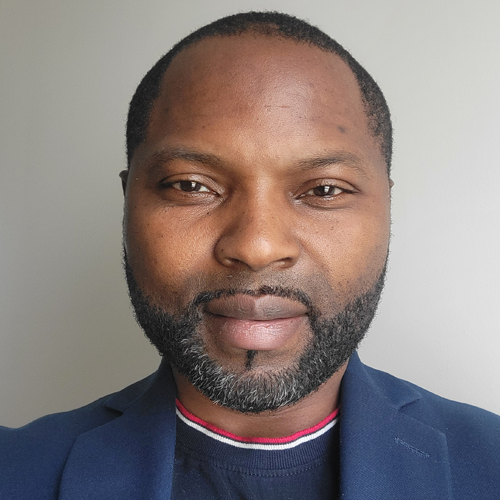
Fred Yonghabi, Sr. Specialist
Con Edison
Fred is dedicated sustainability and environmental professional with more than 10 years of experience in conservation and environmental sustainability.
Fred is passionate about energy efficiency, environmental and corporate sustainability, and this passion has contributed to his continuous interests and wish to become an actor of change to help organizations with their sustainability, ESG, and climate transition.
evVG Facilitator


Nathan Niese, Managing Dir & Partner
Boston Consulting Group
Based in Chicago, Nathan currently serves as BCG's global leader for the Electric Vehicle and Energy Storage topics. He works with OEMs, suppliers, service providers, and ecosystem partners on strategies related to the energy transition.
Become an Ally Supporter
Ally Supporters develop and nurture long term relationships with Vision Group members, playing an integral part in the discussion topics and member recruitment.
VGN Ally Supporters voices are heard in Vision Reports and websites, podcasts, social media, and industry media and events.
Be part of the conversation. Share Today to Shape Tomorrow. Become an Ally Supporter today!