CTVG ALLY SUPPORTERS






System Integration: Driving Store-Level Efficiency & Simplicity
CTVG members were surveyed to prioritize technology topics and the responses were surprisingly not AI or automation, but integration. Specifically, responses identified the growing complexity of the technology environment.
Operating within a partially integrated ecosystem
Operating within a largely integrated environment
Operating within a limited integration or siloed systems
The results showed that nearly all respondents rated system integration as either a high priority or mission-critical to their retail technology roadmap over the next 24 months. The current state of integration, however, told a more complicated story. A majority of respondents described themselves as operating within a partially integrated ecosystem (57.1%), with smaller shares reporting largely integrated environments (28.6%) or limited integration or siloed systems (14.2%). No one reported achieving a fully integrated, API-driven architecture.
Jarrett, former CIO at EG America and Murphy USA and current executive vice president at ResultStack, offered his perspective that governance, compliance requirements, and the competitive pressure to deliver novel guest experiences have all driven technology additions, but the cost of integrating those systems is rarely part of the conversation when new tools are proposed. Reframing integration investment as ROI, rather than as a line-item fix, was his recommended approach to gaining executive support.

“It’s a fight for value. You’re trying to reduce OpEx or marketing comes to you and says ‘wow, we’ve got this new loyalty package and we’re going to deploy it,’ and the vendor’s telling us what they always say – its $1,000,000 a month!”
The efficiency data reinforced that the work is producing results, even if unevenly. Sixty-four percent of respondents said integration had delivered moderate to significant improvement in store-level efficiency. Half of those who could quantify results estimated a reduction in manual processes. Wenner, former CIO at Sheetz, offered a straightforward read on that number: even a 10 percent reduction in store process time translates to meaningful recovered hours in a 40- to 50-hour week, and that is worth something.
When it came to barriers, legacy systems (26.2%) and vendor ecosystem fragmentation (23.8%) led the field, followed by internal IT capacity (21.4%). Rather than treating legacy systems as standalone initiatives, Wenner described embedding integration and architecture improvements within business-facing projects so foundational work progresses alongside operational priorities.
BARRIERS TO DEEPER SYSTEM INTEGRATION
On strategy, data architecture modernization was the clear top priority for integration focus over the next 24 months (25%), but “strategy not yet defined” came in as the second-most common response (15.6%) which Collupy found telling.
Wenner was candid about the difficulty of building organizational alignment around a technology roadmap when multiple departments are pulling in competing directions. Jarrett agreed that strategy is as much of a soft skill as a technical one, and that without clear direction from senior leadership, the IT team is left navigating between conflicting objectives with no fixed point to anchor against.
View the full presentation and statistics and presentation video below.
“Do the best that you can and spend a lot of time walking from office to office trying to help them understand that they’ve got some conflicts in their strategies which drives to IT and means that the results won’t be what we want. So, it’s a lot of work working with your peers in the business to try to create alignment where there is none. So, you have to like people, you have to like conversations, and you have to have thick skin.”

Vendor Partnerships
During the discussion period, vendor selection emerged early as a practical integration strategy, particularly for smaller operators navigating limited capital. Donnie Rhoads, director of business development for The Convenience Group, LLC, said that his organization’s approach has been to prioritize partners whose solutions already communicate with one another. That perspective resonated with Bill Miller, president and GM at GK Americas, who noted from the vendor side that demand for integrations is one of the most time-consuming parts of any new customer deployment, and that the pace of new solutions entering the market is only making that more true, not less.
“When integrating systems, you really just need to be sure that we’re not just creating digital chores for the staff but really solving to the efficiency aspect of it.”
AI as an Integration Accelerator
The conversation around AI as an integration accelerator was an energizing topic. Bill Ridge, VP of technology at Eastern Petroleum Corporation, described how his team has compressed work that once took months into days, including building a bot-driven workflow to automate loyalty group assignments that previously required manual handling at the store or office level. Jarrett agreed with the direction but raised the importance of human oversight, noting that AI-generated code can accumulate technical debt just as any other code can, and that it needs experienced eyes before it goes into production. Having powerful tools is great, noted Anthony Raimato, store technology engineering lead at Wawa Inc., but if engineers are each solving problems on their own without a central plan, the organization can end up with systems scattered across multiple platforms in ways that create bigger headaches down the road.
Workarounds, Complexity, and Embracing the Gobbledygook
Workarounds as a permanent feature of store technology environments produced one of the most candid discussions. Steve Evans, Haffner’s chief technology officer, described a reality where temporary fixes have become the process, compounding over time as exceptions pile up and integration work uncover new problems. Inside his leadership meetings, the entire domain is referred to as “the gobbledygook that Evans talks about,” a label he has chosen to embrace rather than resist. In jest, the group decided they should get tee-shirts that read “Embrace the Gobbledygook.”
Jeffrey Carpenter, director at Cliff’s Local Market, also said that complex “gobbledygook” is as important to the process as a well-trained store team. Mark Hawthorne, chief innovation and strategy officer at Upshop, added that workarounds become especially entrenched when staff turnover is high.
Acquisition Integration and the Store-Level Perspective
The realities of store-level operations brought forth myriad practical examples. Kristina Anderson, Midwest Petroleum Company’s chief service officer, raised the integration burden that comes with acquiring another operator, noting that migrating sales data, employees, and loyalty customers across platforms proves difficult. She also pointed to physical inventory counting as a persistent manual process that technology has not yet solved.
Erin Graziosi, president of Robinson Oil, offered a discipline-focused perspective that her organization treats integration as a subtractive exercise as much as an additive one, asking what can be removed each time something new is introduced. Meanwhile, Raymond Huff, president of HJB Convenience Corp, grounded the efficiency conversation in operational terms, arguing that keeping a manager on the floor rather than in the back office produces measurable value.

“So, the strategy we take is simple, how does it affect the 18-year-old to say at the site level all the way up to the corporate office, so that is a tie back to our ERP and start there.”
Jason Collins, director of IT at Englefield Oil Company Inc, described a straightforward integration philosophy built around ERP compatibility at the corporate level and POS simplicity at the store level, with vendor relationships carrying most of the integration responsibility in between. Roy Austin, director of information technology at Graham Enterprise, Inc., offered a concrete example of operational progress, describing how his team has been building toward a fully automated end-of-day process by integrating the safe, POS, and ERP, largely through APIs built by a now-promoted developer his team discovered working in their own car wash. Jhaddaka (JD) Leverette, I.T. manager at Prince Oil, described her organization’s active effort to automate fuel import data from over ninety consignment locations, work that mirrors the end-of-day automation Austin’s team has been building.
Sam Berkovitz, vice president, account management at Upside and guest of Upside’s Nick Wignall, described his organization’s approach of building around anonymized transaction data rather than POS integration, specifically to reduce the IT burden on retail partners while still delivering reporting at both the store and corporate levels.
Cybersecurity, Access Control, and Compliance
On the issue of cybersecurity, Anderson described migrating office users from direct ERP access and onto a BI platform to limit exposure. She noted the transition required as much soft-skill management as technical execution, since users who lose access to familiar systems often experience it as a loss of trust. In terms of payment security, Rance Wells, vice president of IT at Toot’n Totum Food Stores LLC, noted store staff rarely touch a physical card thanks to tap-to-pay technology, though outstanding point-to-point encryption work remains tied to oil brand timelines rather than internal ones.
Standards, Shared Challenges, and Industry Collaboration
The session closed on the value of industry-wide collaboration and shared standards. Wenner encouraged the group to continue pushing vendors collectively toward common interfaces. Raimato echoed that sentiment, noting that peer conversations across the industry consistently produce better solutions than working in isolation. Jarrett added a direct recommendation for Connexus participation that levels the playing field for smaller operators and holds vendors to interoperability commitments. Myra Kressner, CEO of Kressner Strategy Group and VGN Co-Founder, noted the value of the Connexus Vision Group (CxVG) that met and produced Vision Reports in 2024 and 2025, and that Anderson had drawn direct value from that work in making the internal case for her organization’s technology budget.
“For us [at Sheetz], operations and marketing could never talk with a competitor, but IT always could because we’re trying to move data, we’re evaluating vendors. So we, for the IT side, would talk to everybody because we were just trying to solve common problems.”
Final Reflection
System integration has moved well past a technical question and into a fundamental question about how the industry wants stores to operate. The path toward simplicity exists, but it requires the same discipline and long-term thinking that has always separated those who execute well from those who simply add more systems to manage. As AI compresses the timeline for integration work, the defining challenge will shift from whether integration is achievable to whether organizations have the strategy, the governance, and the leadership alignment to pursue it with intention.
Video Presentation
Survey Results (PDF)

KEY TAKEAWAYS
- Integration has become the industry's defining technology priority, outranking AI and automation, with zero survey respondents calling it unimportant.
- No one has fully solved integration yet. Most respondents (57.1%) described their current state as a partially integrated ecosystem, with no one reporting a fully integrated, API-driven architecture.
- The cost of integration is also part of the conversation when new tools are proposed, even as governance, compliance, and competitive pressures continue to drive technology additions.
- Integration delivers actual results. Sixty-four percent of respondents reported moderate to significant improvement in store-level efficiency, with half estimating a meaningful reduction in manual processes.
- Legacy systems and vendor fragmentation are the leading barriers, cited at 26.2% and 23.8% respectively, followed by internal IT capacity constraints at 21.4%.
- Strategy gaps are as significant as technical ones. "Strategy not yet defined" was the second-most common response when members were asked about integration priorities, pointing to an organizational alignment problem as much as a technical one.
- AI is accelerating integration work but requires guardrails. Without experienced oversight and a central plan, AI-generated code can accumulate technical debt and scatter systems in ways that create larger problems.
- Workarounds have become permanent fixtures in many store environments, compounding over time and becoming especially entrenched when staff turnover is high.
- Smaller operators face distinct integration pressures. Limited capital raises the stakes for vendor selection, making pre-integrated partner ecosystems the most practical path forward.
- Industry collaboration offers a path forward. Participants consistently noted that peer conversations and collective pressure on vendors toward common interfaces and shared standards produce better outcomes than working in isolation.
Contact info@vgnsharing.com if you’d like the meeting transcript.
Notable and Quotable
“Integration is both a challenge and something that just sits right in front of us. If integration doesn’t make stores easier to run, then we may just be adding another layer of complexity.”
“We shouldn’t fight how people want to communicate. We should understand what they’re trying to say and then do what we have to do. That’s why we’re here.”
“There is no more permanent solution than a temporary solution because once you have it right, you feel good.”
“The stakes for investing in these kind of solutions are maybe a little bit higher when you’re dealing with limited capital because you’re going to pick a lane and probably have to stick with it.”
“Every time our owner brings in something new, it rarely integrates with anything, but that’s okay. We have to figure it out and it allows us to be creative as an IT department.”
“I just don’t want to have to trust a cashier or a general manager in store to be an IT tech. I’d rather take as much away from their hands as possible.”
“Time is money and what we found is if we can keep the manager out of the office, we make a lot more money because they see so many things that go on the floor that actually will improve the business.”
“We kind of jokingly refer to it as the ‘gobbledygook’ but arguably, it’s as important as a well-trained staff and team within the store that we often spend more time focusing on it and talking about it”
“For things to be easy at the store, when we talk about ease, there’s nothing more complex than easy. The amount of complexity and standardization that’s required underneath to make it easy, that’s the real challenge, right?”
“Every time you bring on something new, can you get rid of something else? We’re trying to go through that and ask if we’re doing this now because of reason X, whether it’s going to save time, it’s better data, or whatever. What can we replace or get rid of so that we don’t just kind of keep adding on to things.”
CTVG Members
Luis Ackerman, Vice President of Technology
The Spinx Company
Luis Ackerman is the Vice President of Technology at The Spinx Company and has been a key member of the executive leadership team since 2017. With a focus on aligning technology with business objectives, he has led initiatives that improve operational efficiency, enhance security, and elevate the customer experience. By developing a structured technology roadmap, Luis has streamlined workflows, reduced costs by expanding in-house capabilities, and leveraged automation to optimize retail operations.
A strong advocate for cybersecurity and data-driven decision-making, Luis has assembled a world-class security posture by integrating best-in-class solutions and fostering a security-first culture. Under his leadership, Spinx is developing a next-generation data modernization strategy, that will provide advanced analytics and insights to drive smarter business decisions. His strategic vision ensures that technology remains a competitive advantage, delivering measurable value across the organization.
Before joining Spinx, Luis spent 12 years as a managing partner and customer CTO, helping businesses across industries—including medical, retail, manufacturing, distribution, consulting, e-commerce, and entertainment—transform their IT landscapes. Luis holds a degree in Computer Science, along with multiple technical certifications, and continues to expand his expertise through executive leadership training and specialized technology programs. He is committed to driving innovation through technology and believes it is essential for any business to grow and maintain long-term success.
Outside of work, Luis enjoys spending time with his wife, kids, and friends. A passionate sports fan, he loves watching and playing whenever he gets the chance. He also has a deep appreciation for cars, music, and cooking.
Kristina Anderson, Chief Service Officer
Midwest Petroleum Company
Kristina manages the Human Resources, Training and Development, Maintenance, Construction, Petroleum Construction, transportation and IT Departments for Midwest Petroleum Company.
Roy Austin, Director, Director, Information Technology
Graham Enterprise, Inc.
Roy Austin, IT Director for Graham Enterprise, Inc., is responsible for Technology applications & operations in the organization’s Corporate and Retail business units.
Graham Enterprise, Inc. was in the midst of a major rebranding campaign of their legacy convenience store and car wash brands to the newly create Trio brand when Roy joined the team, which was an intriguing challenge to jump right in the middle of. The campaign has a focus on unified branding, a great new food service program including fresh and take-and-bake pizza, tunnel car washes and of course, the fantastic customer service that the Graham family is known for.
Prior to joining Graham Enterprise, Inc. in November of 2024, Roy was Director of IT Solution Delivery for Global Retail at Calgary, Alberta-based Parkland Corporation and was responsible for POS and BOS applications across Parkland’s vast estate of retail locations in 27 countries.
Roy worked in various roles for Kroger’s Technology division for over 20 years. During those years, he supported their various convenience store chains which were sold to EG Group in 2018.
With the EG Group acquisition of Kroger’s convenience store assets, he was named Head of Applications for the newly formed EG America. Roy was responsible for helping to lead the technological decoupling efforts from Kroger’s systems, as well as integrating EG Group’s other acquisitions (from 800 to 1200 stores) before departing in 2020.
His experiences in convenience store technologies are:
- Retail POS Deployment/Support – NCR RPOS, Gilbarco Passport, Verifone Commander, Bulloch, Artisoft POS, RapidRMS
- QSR POS Deployment/Support – NCR RPOS/Aloha/KPS, Subway, Charleys Philly Steaks, Dairy Queen, Taco Bell, Arby’s, Burger King
- Major Oil Brand Integrations – BP, Shell, ExxonMobil, ConocoPhillips, Sinclair, Cenex, Arco, Marathon, Valero, Chevron
- Loyalty – PDI Excentus, P97, KRS/Ignite Retail Technology, Artisoft SpeedPay, Major Oil Proprietary
- Mobile – P97, Zipline, Photon, Artisoft
- ERP Systems – PDI Enterprise & Envoy, SSCS, Dynamics GP, Eurodata
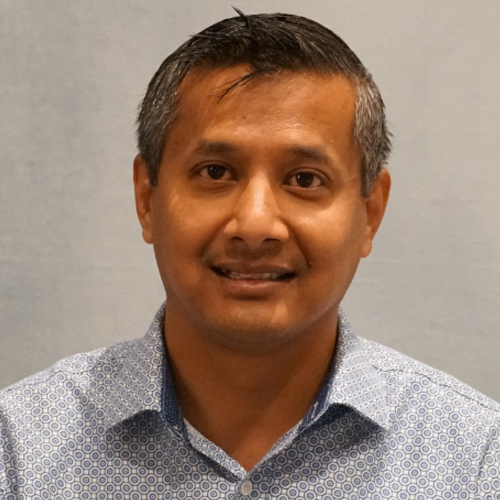

Jeffrey Carpenter, Director
Cliff's Local Market
Starting his career in the convenience store industry, Carpenter joined the well-known Nice N Easy Grocery Shoppes team, after graduating high school in 2005, while earning both his Bachelor’s and Master’s degrees at Syracuse University. Carpenter went on to teach publicly at a high-ranking ‘Newsweek School’ while still working with Nice N Easy, but after two years found his niche as Director of Education and Training with the well-known c-store brand.
During Carpenter’s time at Nice N Easy he grew into the role of Senior Director of Program Development overseeing multiple areas of the business. Nice N Easy was acquired by CST Brands in 2014 and Carpenter continued with the training and development team. When CST was acquired in 2017, he sustained his employment as Training Manager in the Great Lakes Business Unit of Circle K. Upon an opportunity to apply his expertise and remain local with Cliff’s Local Market in 2018, Carpenter gladly accepted a senior-level position where he has helped evolve the NY-based chain with 400+ employees.
A natural leader with a passion for his community, Jeff has also served as Trustee, as well as Deputy Mayor, in his local area. Carpenter is married and has two children.

Jason Collins, Director of IT
Englefield Oil Company


[vc_row][vc_column][vc_column_text uncode_shortcode_id="115689"]
Steve Evans, Chief Technology Officer
Haffner's Energy North Group
As the Chief Technology Officer at Haffner's, I spend me days building technology solutions that move our five lines of business forward. In that capacity, I've spent time learning our car wash business and our upgrading car wash technology.
I'm a twenty plus year veteran of the Oil & Gas business and have had the good fortune to work up and down the value chain.[/vc_column_text][/vc_column][/vc_row]

Janeth Falcon, VP North America Technology
Circle K


Tyler Grubbs, VP of Retail and Digital Technologies
RaceTrac, Inc.
Tyler Grubbs is currently serving as the VP of Retail and Digital Technologies where he has accountability for all the technology across the convenience store locations for the RaceTrac, RaceWay & Gulf brands. Additionally, he his teams lead efforts around web, mobile and loyalty applications across these brands. Tyler is a process focused leader with a pension for finding creative solutions to complex problems across the business through building & developing high performing teams. He has spent most of his career at RaceTrac, Inc. serving in multiple roles over the last 14 years across departments like: Project Management, Finance, Analytics & Food Programs. He holds a degrees from Georgia Institute of Technology in Finance as well as an MBA from Emory University with a concentration in Management Consulting & Analytics. Tyler was recently recognized as a 40 Under 40 by CSDecisions, RIS Top Retail Mover & Shaker, and Emerging Leader by Atlanta Technology Professionals.

Mark Hawthorne, Chief Innovation and Strategy Officer
Upshop
Mark is a senior food retail executive with nearly 20 years of experience at Safeway and Albertsons Companies, where he helped build enterprise capabilities across pricing, promotions, merchandising, loyalty, and shopper analytics.
He later served as a Partner at Nsight, advising grocery retailers and food retail technology providers on market strategy, operating models, and technology investments that deliver measurable results.
Mark is now Chief Innovation and Strategy Officer at Upshop, leading market strategy, growth, and value realization. He works closely with retail executives to support long-term planning and ensure technology investments translate into real business outcomes.


Sharif Jamal, Dir of Real Estate & Brand Development
Chestnut Market


Jhaddaka (JD) Leverette, I.T. Manager
PRINCE OIL
I am an IT Manager/Retail Analyst in the oil and gas industry, with over 25 years of retail operations knowledge and 15 years of experience driving digital transformation, business continuity, and operational efficiency through technology. I have strategic insight and leadership in data integration and system optimization.
Beyond my corporate role, I am the founder of Blu3tech Consulting, where I support businesses in adopting secure and scalable tech solutions. I am also a passionate advocate for youth development and STEM education, dedicating time to community mentorship and nonprofit initiatives.


Brad Miller, Senior Director of IT
Coen Markets
With a career in technology spanning thirty years, Brad has worked in technology retail, as a Project Manager, .NET developer and Network Administrator for a software company in the field of Health Care, an Infrastructure Specialist in the state government sector, and has spent the last thirteen years working in the C-store space, first as Director of Technology for Par Mar Stores and since 2017 as the Senior Director of Technology for Coen Markets. Brad resides in Canonsburg, PA with his wife of thirty years (and their two cats) and can be reached at bmiller@coen1923.com.

Steve Morris, President
Retail Management, Inc (RMI)
Steve Morris is the President & Owner of Retail Management Inc., a retail management & marketing services provider for retailers nationwide and is an elected member of the City Council for Woodbury, MN.
Steve has served in leadership roles for over 25 years within convenience and retail sectors. He served as Director of Marketing & Merchandising for SuperAmerica stores & Speedway, where he continued the work of brand development and management and as Director of Operations Strategy and Planning, where he held oversight and responsibility for the Twin Cities and Minnesota markets for retail operations.
Steve was elected in 2018 and re-elected in 2022 as Councilmember for the City of Woodbury having served previously on the Planning Commission, and currently serves on the Economic Development Authority and Housing & Redevelopment Authority for the city.
Steve supports numerous organizations and serves on the Board of Directors for several organizations including: "Majority in the Middle", a 501c3 dedicated to lowering the temperature of politics and finding common ground to serve the people of Minnesota, as well, "Metro Cities", a coalition of Twin Cities metropolitan area communities working and lobbying the state capital on behalf of individual cities, counties and townships; "The United Heroes League", a non-profit military family support organization; and the "Woodbury Police K-9 Foundation", supporting the K9 program development and support for the city of Woodbury Minnesota.
Steve and his husband Justin live in Woodbury with their two dogs and enjoy softball, concert-going and walking the miles of trails in their community.


Nick Peters, VP - IT
Campbell Oil Company
I am an IT professional with over 20 years experience in the convenience retail field. Starting off my career in operations, I then converted over to the IT side of the industry over 15 years ago.
As a strong believer in technology, I have always been forward-thinking as it comes to the application and practicality of new capabilities. I’m also a supporter of industry collaboration and standardization in an effort to assist with the adoption of new technologies.

Anthony Raimato, Store Technology Engineering Lead
Wawa Inc
Anthony Raimato has been with Wawa for 13 years and spent most of his time working with POS systems in all aspects from support to engineering deployments and enhancements. Anthony has spent time working with partners for settlement, mobile integrations, ordering applications, and operations partners to simplify store operations and provide new customer features into stores.
While Anthony is proud of the work his team has performed historically, he is most excited about the future of convenience store technology and how technology can further enhance customer and associate experience within stores.

Donnie Rhoads, Director of Business Development
The Convenience Group, LLC
Donnie Rhoads is Director of Business Development at The Convenience Group, LLC. Based in Southwest Washington, TCG is a collection of community stores that both reflect and serve their individual neighborhoods.
Donnie works to streamline store operations and oversee initiatives for growth, especially when it comes to the implementation of new technology. He is also an avid Seahawks fan and loves to cook.

Bill Ridge
Eastern Petroleum Corporation

Emily Sheetz, EVP Strategy & IT
Sheetz Inc.
Emily is the Executive Vice President of Strategy and IT at Sheetz and is responsible for the development of and execution of company strategy, information technology and business insights. Emily is a third-generation family member and one of fifteen active in the business. Emily grew the functions of strategy, innovation and business insights since 2017. She previously held the title of the Director of Talent Development, responsible for all training and leadership development across the company. Emily participated in a leadership rotation program within the company and has held positions in Real Estate, Human Resources, Operations, Store Development and Information Technology. She helped to launch the Sheetz Cafe project. She has also served on the Sheetz Family Council.
Prior to rejoining Sheetz, Emily helped to found Knightsbridge Schools International, a private, for-profit K-12 school in London, an affiliate of Knightsbridge School. She spent five years heading up business development and finance and helped to open schools in Turkey, Montenegro, Columbia and Panama. Emily previously worked for three years at Deutsche Bank in New York in Debt Capital Markets and for a year at Huron Consulting Group. She also has spent time at Sheetz since the age of fifteen, working various functions in marketing, finance and as a salesperson over the years.
Emily holds an MBA from Columbia Business School and her BS in Economics from The Wharton School of the University of Pennsylvania. She lives in Pittsburgh, PA with her husband Justin and their three children, Felix, Lila and Naomi.
Established in 1952 in Altoona, Pennsylvania, Sheetz, Inc. is one of America's fastest-growing, family-owned and operated convenience store chains, with more than $6.4 billion in revenue and more than 18,200 employees. The company operates more than 580 store locations throughout Pennsylvania, West Virginia, Virginia, Maryland, Ohio and North Carolina. Sheetz provides an award-winning menu of M•T•O® sandwiches and salads, which are ordered through unique touch-screen order point terminals. All Sheetz convenience stores are open 24 hours a day, 365 days a year. Recognized by Fortune as one of the 100 Best Companies to Work For, Best Places to Work for Women, Best Workplaces for Millennials and by Forbes as one of America’s Best Employers, Sheetz is committed to offering employees sustainable careers built on an inspiring culture and community engagement. For more information, visit www.sheetz.com or follow us on Twitter (@sheetz), Facebook (www.facebook.com/sheetz) and Instagram (www.instagram.com/sheetz).

Scott Smith, Sr Director of IT
Parker’s
At Parker’s, Smith leads the company in all aspects of technology, including the company’s round-up for charity technology, self-checkout systems, cloud infrastructure, servers, and the efficiency of payment systems, which process more than 125,000 transactions per day. He also ensures that the Parker’s Rewards app is up-to-date and efficiently serving the loyalty program’s 300,000+ members.
Before joining Parker’s in 2021, Smith worked as the Director of Information Technology at convenience and fuel retailer Royal Farms in Baltimore, Md., where he led the IT department’s security, infrastructure, and retail operations initiatives for hundreds of stores across multiple states.
Earlier this year, Smith was named a “Future Leader in Convenience” by Convenience Store He is news for his impressive professional achievements and currently resides in Savannah, Ga.

Rance Wells, VP of IT
Toot’n Totum
Rance Wells is the Vice President of IT for Toot ‘n Totum Food Stores LLC. Toot ‘n Totum has enjoyed much growth over the last several years as one of the largest privately owned employers in the Amarillo area. The company, founded in 1950, consists of 87 convenience stores, 8 full service car washes, 11 car care centers, 6 Wendy’s Quick Service Restaurants, 3 Mitch’s Texas Style BBQ Quick Service Restaurants, and 2 Which Wich Sandwich shops with a Team Member count of over 1,300. Toot’n Totum has 63 locations in Amarillo, Texas and has expanded to 24 other locations in the Kansas, New Mexico, Oklahoma, and other towns in the Texas Panhandle.
A 2005 graduate of West Texas A&M University with a Bachelor of Science degree, Rance began his career with Toot ‘n Totum in 2001 as a store Team Member, working his way through college. He moved out of the stores and joined the IT Support Team from 2006 – 2013. Rance took over as Director of IT in 2013 and promoted to Vice President in 2022. His experience has given him a unique perspective when it comes to end user experience, speed of service, and directly engaging guests.
With 16 years of IT technology and petroleum retailing experience, he has been a part of expanding the company outside Amarillo, increasing the company’s security, and improving the technology processes for Toot ’n Totum.
He is excited to be working at such a pivotal time for the company during their expansion south of Amarillo. Rance serves on the Executive Board for Toot ‘n Totum, Verifone Petroleum Advisory Council, Acumera Client Advisory Board, and is a member of Conexxus. Other areas of interest include PCI Compliance, Data Security, Point to Point Encryption (P2PE), Internet of Things, Smart Safes, Surveillance Systems, Blockchain/Cryptocurrency, AI Applications in business, self-checkout systems, Cloud Hosting, automation, and any other technology that can help his company succeed.
Rance has been married to love of his life, Megan, for 13 years. They enjoy every minute raising their 5-year-old son Tripp. They enjoy hunting, fishing, camping, music, soccer, hockey, gardening, cooking, training their field bred Golden Retriever Poppy, and attending church with their friends and family.


[vc_row][vc_column][vc_column_text uncode_shortcode_id="119527"]
Nicolas Wignall, Director of Strategic Accounts
Upside
Nick Wignall is the Director of Strategic Accounts at Upside, a digital marketplace transforming how brick-and-mortar retailers drive measurable profit. With four years at Upside and over a decade of leadership in the consumer goods and energy sectors, Nick specializes in turning complex retail challenges into scalable growth opportunities.
Prior to joining Upside, Nick spent 10 years at Altria in various leadership capacities, including Southeast Region Manager for Industry Engagement. This background in sales analysis, team leadership, and industry advocacy allows him to navigate the intricate needs of enterprise stakeholders with a data-driven, merchant-centric perspective. Nick holds a Bachelor's degree in Marketing from Iowa State and an MBA from Tennessee Tech. Nick has previously served on the Board of Directors at other CPG associations throughout the Southeast; including Florida Association of Wholesale Distributors (FAWD), Georgia Association of Convenience Stores (GACS) and Alabama Wholesale Distributors Association (AWDA).[/vc_column_text][/vc_column][/vc_row]

Amy Wood, Director of Enterprise IT
Friendly Express, Inc.
Amy Wood is the Director of Enterprise IT at Friendly Express, a locally owned convenience store chain headquartered in Waycross, Georgia. With 38 locations across Southeast Georgia, Friendly Express is known for its commitment to fast, friendly service, quality food offerings, and embracing technology to enhance the customer experience.
Amy brings over 25 years of experience in retail technology and operations, previously serving in leadership roles at Flash Foods and Gate Petroleum. She holds a degree in Computer Science from Mercer University and was recognized as one of Convenience Store News’ 2025 Top Women in Convenience.
She enjoys spending time with her family and cheering on the GA Bulldogs and the Atlanta Braves! Go DAWGS! Go BRAVES!
With 16 years of IT technology and petroleum retailing experience, he has been a part of expanding the company outside Amarillo, increasing the company’s security, and improving the technology processes for Toot ’n Totum.
He is excited to be working at such a pivotal time for the company during their expansion south of Amarillo. Rance serves on the Executive Board for Toot ‘n Totum, Verifone Petroleum Advisory Council, Acumera Client Advisory Board, and is a member of Conexxus. Other areas of interest include PCI Compliance, Data Security, Point to Point Encryption (P2PE), Internet of Things, Smart Safes, Surveillance Systems, Blockchain/Cryptocurrency, AI Applications in business, self-checkout systems, Cloud Hosting, automation, and any other technology that can help his company succeed.
Rance has been married to love of his life, Megan, for 13 years. They enjoy every minute raising their 5-year-old son Tripp. They enjoy hunting, fishing, camping, music, soccer, hockey, gardening, cooking, training their field bred Golden Retriever Poppy, and attending church with their friends and family.
CTVG Facilitator


Ed Collupy, Principal
Collupy System Solutions LLC
Ed has more than 40 years of retail systems experience in the convenience/petro (The Pantry) and grocery (Purity Supreme & Shaw’s) retail channels, including as a consultant at W. Capra Consulting Group providing strategic, operational, and project leadership to retailers, emerging businesses, and technology companies. His involvement in the industry continues as a Facilitator for various groups and as an independent consultant through Collupy System Solutions. He has served the Convenience/Petro industry as Chairman of the Board of Advisors of Conexxus and as a member of the NACS Convention Content Committee. Ed writes for trade publications, leads, and participates in on-line and in-person forums focused on retail technology. A New Englander at heart, he graduated from Suffolk University in Boston, attended Harvard’s Executive Education session, Delivering Information Services, and now living on Cape Cod he is very active in the community serving on various boards and committees.
Become an Ally Supporter
Ally Supporters develop and nurture long term relationships with Vision Group members, playing an integral part in the discussion topics and member recruitment.
VGN Ally Supporters voices are heard in Vision Reports and websites, podcasts, social media, and industry media and events.
Be part of the conversation. Share Today to Shape Tomorrow. Become an Ally Supporter today!